
Striga hermonthica
Striga hermonthica
Description
How to identify
Striga hermonthica, commonly known as witchweed, is an obligate root parasite belonging to the Orobanchaceae family. It is an annual herbaceous plant with a vertical stem and narrow leaves, growing up to 50 cm tall.
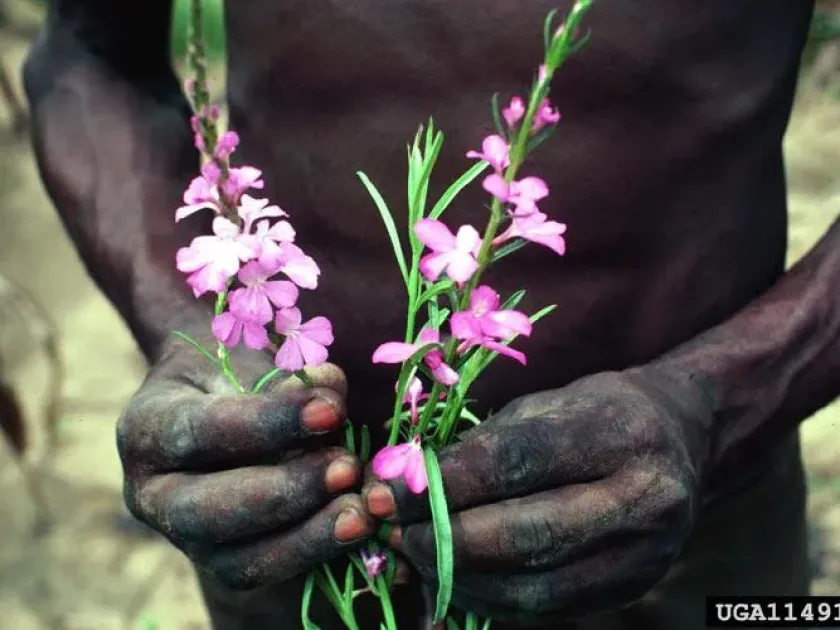
The plant is easily recognized during flowering by its bright pink flowers. It possesses a modified root system that forms haustoria, which penetrate the host's roots to extract nutrients and water.
It reproduces via tiny seeds produced in huge quantities, which can remain dormant in the soil for up to 20 years. Seeds are easily dispersed by wind, water, and agricultural machinery.
Biologically, it is a hemiparasite; while it can photosynthesize, it relies heavily on the host during its initial growth phases to establish a connection and obtain vital resources.
This species is widely considered one of the most destructive agricultural weeds in tropical and subtropical regions, particularly across sub-Saharan Africa.
What it damages
The primary hosts of Striga hermonthica are cereal crops such as sorghum, maize, pearl millet, rice, and sugarcane. The parasite significantly stunts the growth of the host plant.
Damage is characterized by nutrient deficiency, stunted development, and reduced grain yields. In severe infestations, the entire crop may fail before reaching maturity.
Besides extracting water and mineral nutrients, the parasite releases toxins that interfere with the host plant's physiological processes, causing chlorosis and wilting.
The economic impact is devastating for smallholder farmers, as the weed thrives in depleted soils where host crops are already under stress.
If not controlled, the parasite can cause yield losses ranging from 30% to total crop failure, making it a critical threat to regional food security.
Signs of infestation
The first visual signs of infestation are often observed as general weakness and chlorosis in the host crop, resembling severe nitrogen deficiency despite adequate fertilization.
The most distinctive sign is the emergence of the parasite's pink flowers around the base of the crop stalks, indicating that the weed has already caused significant subterranean damage.
Early-stage detection requires excavation to inspect the root system for the presence of haustoria attached to the crop roots.
Wilting of crops during periods of sufficient moisture is another indirect indicator of a successful parasitic attachment beneath the soil surface.
Control measures
Integrated Striga management often involves the use of "trap crops," such as cotton or legumes, which trigger the germination of Striga seeds without supporting their development.
Agronomic strategies include long-term crop rotation, the use of Striga-resistant crop varieties, and manual weeding to prevent the parasite from flowering and producing seeds.
The application of nitrogen fertilizers has been shown to reduce Striga infestation, as the host plant gains enough vigor to limit the parasite's physiological impact.
Chemical control is challenging and requires precise timing to avoid harming the host crop, making integrated biological and mechanical approaches more popular.
Strict quarantine and cleaning procedures for agricultural tools are essential to prevent the spread of dormant seeds to uninfested fields.
Causes diseases · 1
Discussion
No discussions yet — be the first.