
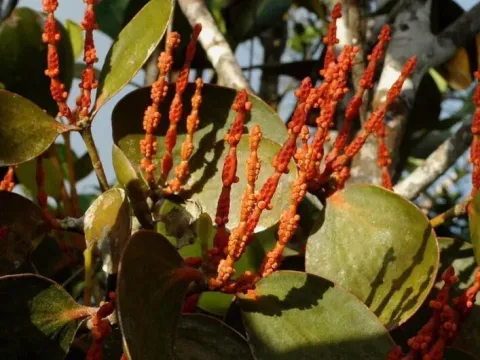
Dendrophthora
Denrophthora
Dendrophthora is a genus of evergreen hemiparasitic shrubs belonging to the Santalaceae family. These plants are epiphytic, attaching themselves to the branches of host trees to extract essential water and mineral nutrients.
What the section contains
Dendrophthora
Morphologically, Dendrophthora appears as a dense, dichotomously branched shrub. Unlike typical autotrophic plants, it relies on a specialized haustorial system that penetrates the host’s xylem to tap into its internal resources.
The plant produces berries containing sticky substances, which are a key adaptation for dispersal. Birds consume these fruits and deposit the seeds onto the branches of other trees, facilitating the spread of the parasite.
The genus includes numerous species primarily distributed in tropical and subtropical regions. In these habitats, they act as significant phytopathogens that can colonize a wide variety of woody host plants.
Proper identification requires examining the inflorescence and fruit characteristics, as they differ from other related parasitic genera like Phoradendron, though the general impact on the host remains similar.
Dendrophthora infestation significantly impacts the vitality of trees. By siphoning nutrients and water, the parasite imposes a constant metabolic burden on the host, leading to a general decline in tree health.
As the haustoria penetrate deep into the wood, the flow of nutrients within the host branch is disrupted. This often leads to chlorosis, stunted growth, and a reduction in the host's overall photosynthetic capacity.
The parasite creates mechanical stress and openings in the bark, which serve as entry points for secondary bacterial and fungal infections. This accelerates the degradation of the host's branch tissue.
In high-density infestations, the cumulative effect can result in the loss of major branches and overall crown dieback. For fruit-bearing trees, this manifests as a significant decrease in total yields.
If left unmanaged, the continuous depletion of resources leads to the premature death of the host tree, especially during periods of environmental stress like drought or heatwaves.
The most prominent sign is the presence of lush, green, shrubby growth on tree branches that remains visible even after the host sheds its leaves. This provides a clear indication of infestation.
Infection sites are often marked by localized swellings or hypertrophy of the host’s branch. This is the tree's physiological response to the invasive haustorial growth of the parasite.
A noticeable symptom is the premature yellowing and thinning of leaves in the immediate vicinity of the parasite. This is caused by the localized depletion of minerals needed for leaf development.
Branch deformation is a common indicator, where the host's growth pattern is interrupted. Distorted, twisted branches often appear as the tree attempts to cope with the physiological stress of the parasite.
In advanced cases, the tree crown shows a sparse appearance with dead tops of primary branches, commonly known as dieback. This signals that the parasite has successfully established a major connection to the tree's plumbing.
The most effective method of control is the mechanical removal of the parasite. Infected branches must be pruned at least 20–30 centimeters below the point of attachment to ensure all haustoria are removed.
It is essential to dispose of all pruned material by burning it immediately. Leaving infested debris on the ground allows seeds to potentially spread, maintaining the cycle of infection in the area.
Consistent monitoring of the garden is crucial, especially during the dormant season when the parasite is clearly visible against the bare branches of deciduous trees.
Maintaining tree health through proper fertilization and irrigation provides the best defense against infestation. Robust trees are generally better equipped to resist the colonization attempts of hemiparasitic plants.
Currently, there are no widespread chemical treatments that can effectively eliminate Dendrophthora without harming the host, making physical pruning the standard and most reliable management practice.