
Dematophora
Dematophora
Dematophora (scientific name Dematophora necatrix, teleomorph Rosellinia necatrix) is a sac fungus belonging to the Xylariales order. In its asexual stage, it produces characteristic white mycelial strands, which are its primary identifier.
What the section contains
Dematophora
This pathogen is a soil-borne facultative parasite known for its high survival rate in various soil types. The mycelium spreads through the substrate, penetrating the root systems of healthy plants via wounds or natural openings.
The fungus is highly aggressive and can survive for extended periods on organic debris, making it a severe threat to perennial woody plants and orchard health.
Systematically, it is classified under the kingdom Fungi, phylum Ascomycota. Its life cycle involves both vegetative propagation through mycelium and the production of perithecia for sexual reproduction.
The species D. necatrix is the primary causative agent of white root rot, affecting a wide range of hosts, including deciduous fruits, berries, and forest trees.
Dematophora causes a destructive condition known as white root rot, which targets the root collar and primary structural roots. This leads to impaired nutrient uptake, wilting, and ultimately plant death.
The pathogen frequently attacks pome and stone fruits, such as apples, pears, cherries, and plums, as well as grapevines. It is prevalent in temperate and subtropical regions globally.
In addition to orchard crops, the fungus affects various ornamental shrubs and forest species. The natural resistance of many commercial varieties is low, which complicates traditional breeding strategies.
The damage is caused by the fungus colonizing the root system rapidly. The infected plant loses its ability to absorb water and nutrients, resulting in stunted growth, reduced yield, and premature senescence.
In intensive farming, the disease can wipe out large orchard sections as the mycelium actively expands in the soil, spreading from infected roots to healthy neighboring trees.
Fungal activity is triggered by high soil moisture and moderate temperatures. Optimal conditions for mycelial growth occur when humidity levels exceed 60%.
Disease development is often observed in heavy, poorly aerated soils where water stagnation occurs. These environments provide the ideal microclimate for the white mycelium to proliferate in the rhizosphere.
The life cycle persists throughout the year if environmental conditions allow for continued metabolic activity. During winter, the fungus remains dormant in roots or as sclerotia in the soil.
Spread within an orchard occurs via contaminated planting material, infested agricultural tools, and water runoff during heavy rainfall or improper irrigation.
Spring and summer, characterized by warming temperatures and moisture, represent the most active phase of root infection, making this period critical for disease surveillance.
The first visual symptom of infection is general plant decline, characterized by leaf chlorosis and premature leaf drop. Canopy branches often start to die back from the top down.
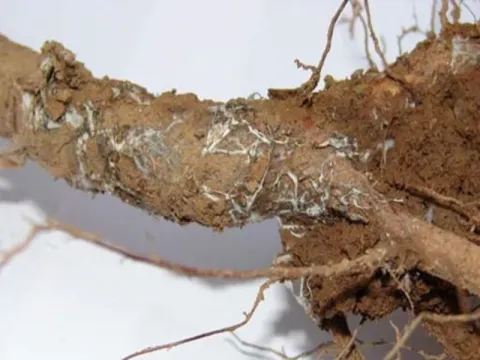
Upon examination of the root system, a white, spider-web-like mycelial mat is visible on the surface of the roots. The underlying tissue softens, turns grayish-brown, and emits a distinct musty odor of decay.
Under the bark of affected roots, small black dots or sclerotia are often found; these resting structures enable the fungus to survive unfavorable conditions.
In advanced stages, the root wood structure disintegrates into a pulpy mass. Infected plants can be easily pulled from the ground as the vast majority of fine feeder roots are destroyed.
- Early-season leaf yellowing;
- White mycelial growth at the root collar;
- Dieback of branches;
- Softening of root tissues;
- Presence of black sclerotia.
Management strategies require an integrated approach involving cultural, biological, and chemical methods. The primary step involves the removal and destruction of infected trees, including their main root system.
It is essential to follow good agricultural practices: avoid soil waterlogging, improve drainage, and apply balanced fertilization to enhance plant vigor and immune response.
When establishing new orchards, only certified disease-free stock should be used. The soil in areas where infected plants were removed requires deep sterilization.
Chemical control involves the application of specific fungicides as a soil drench in localized infection zones, though efficacy is often hampered by the deep penetration of mycelium in the soil profile.
Biological control agents, particularly fungal antagonists like Trichoderma species, show significant promise in suppressing Dematophora growth and restoring soil health in the rhizosphere.