
Diaporthe columnaris
Diaporthe columnaris
Diaporthe columnaris is an ascomycete fungus belonging to the family Diaporthaceae. It is recognized as a plant pathogen capable of causing stem necroses and blights on a variety of agricultural crops.
What the section contains
Diaporthe columnaris
The fungus undergoes a complex life cycle, alternating between sexual stages (perithecia) and asexual stages (pycnidia). The sexual stage typically develops on dead plant tissue, contributing to long-term survival in the field.
Taxonomically, it is classified within the order Diaporthales. Understanding its classification is crucial for distinguishing it from other similar fungal pathogens that may infect the same host plants.
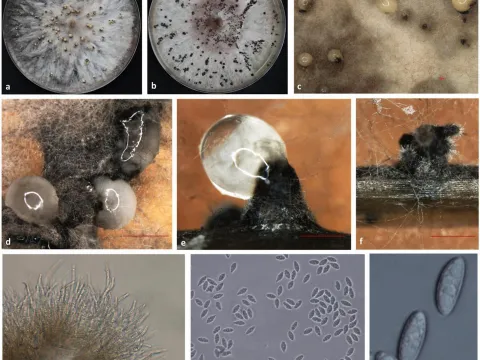
Identification is primarily based on the morphology of its conidia, which are produced in pycnidia. The presence of both alpha and beta conidia is a key diagnostic feature used in laboratory settings.
The fungus is adapted to temperate climates and survives in soil, on plant debris, and occasionally within contaminated seeds, making it a persistent threat in agricultural systems.
This pathogen targets stems, petioles, and reproductive structures of diverse dicotyledonous plants. By infecting the vascular tissues, it impedes the transport of nutrients and water.
The primary damage includes stem girdling, which often leads to wilting, plant lodging, and eventual death of the affected parts. This results in significant yield losses in susceptible crops.
In addition to direct damage, Diaporthe columnaris can colonize plants that are already stressed by environmental factors or other pests, acting as a secondary infection that worsens the crop's condition.
Seed-borne infection is another significant concern, as it can reduce germination rates and introduce the pathogen into new areas, impacting the quality of the harvested produce.
The overall impact of this pathogen varies depending on host susceptibility, local environmental conditions, and the presence of inoculum from previous cropping seasons.
Typical symptoms involve the appearance of brown to black necrotic spots on stems, particularly near the nodes or the soil line. These spots may enlarge over time and merge.
Under humid conditions, small, black, erumpent pycnidia become visible on the surface of the lesions. These structures are the sites where the fungus produces its spores for dispersal.
Foliar symptoms may include chlorosis and necrosis starting from the leaf margins, eventually leading to premature senescence and defoliation of the infected plant.
Internal tissue degradation is a hallmark of this disease; the pith often turns brown and disintegrates, making the stem structurally weak and susceptible to breaking under wind pressure.
The development of the fungus is often correlated with prolonged periods of leaf wetness and moderate to warm temperatures, which facilitate the spread of pycnidiospores.
Effective management of Diaporthe columnaris relies on an integrated pest management (IPM) strategy that prioritizes prevention and sanitation.
Crop rotation is essential to break the infection cycle, as it reduces the inoculum load in the field. Avoiding the planting of susceptible crops in short intervals is highly recommended.
Field sanitation, specifically the thorough incorporation or removal of crop residues, helps in reducing the overwintering potential of the fungus.
The application of registered fungicides during critical growth stages can protect the crop, particularly when weather forecasts predict conditions favorable for fungal growth.
- Use of certified, disease-free seed material.
- Seed treatment with appropriate fungicides to prevent early-season infections.
- Maintaining optimal plant density to ensure adequate air circulation and reduce humidity.
- Integrated weed management to remove alternative host plants.