
Diapleella coniothyrium
Diapleella coniothyrium
Description
How to identify
Diapleella coniothyrium (syn. Coniothyrium fuckelii) is a significant fungal pathogen known for causing cane blight in various woody plants, particularly raspberries and roses.
As a member of the family Didymellaceae, this fungus utilizes both sexual (pseudothecia) and asexual (pycnidia) stages to persist in the environment and infect new hosts.
The fungus is characterized by its ability to overwinter in infected plant debris, such as canes and stems, allowing it to survive through harsh winter conditions.
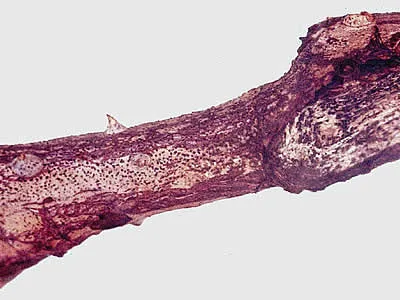
Microscopic analysis reveals small, dark, flask-shaped pycnidia within the lesions of the infected host tissue, which serve as the primary source of secondary inoculum.
This pathogen prefers high humidity and temperatures typical of spring and early summer, making these periods critical for the spread of the disease.
What it damages
The primary impact of Diapleella coniothyrium is observed in commercial raspberry production, where it causes severe cane blight, leading to wilting and death of canes.
In addition to berries, the fungus frequently attacks rose bushes, causing what is commonly referred to as "graft canker" or "brand canker," which threatens the health of ornamental gardens.
The pathogen infects plants through wounds caused by pruning, insects, or environmental stress, such as frost cracks, which provide easy entry for the fungal hyphae.
Once inside, the fungus colonizes the cortex and vascular tissues, disrupting the transport of water and nutrients, resulting in the premature death of the affected parts.
Long-term damage includes reduced fruit yield, lower plant vigor, and, in severe cases, the complete death of the canes before they can bear a full harvest.
Signs of infestation
Infection is often first noticed as small, purple or reddish-brown spots on the stems, which gradually enlarge and become more necrotic as the season progresses.
These lesions often develop a cracked, sunken appearance, with the outer layers of the bark peeling off to reveal the woody stem tissue underneath.
During the humid months, small black fruiting bodies (pycnidia) become visible on the surface of the lesions, indicating active spore production.
Leaves on infected canes may show symptoms of chlorosis, followed by wilting and browning, as the stem below the leaves is compromised by the fungal infection.
In severe infections, the canes turn dark brown or black, becoming brittle and prone to snapping during strong winds or under the weight of the fruit.
Control measures
The most effective management strategy is rigorous sanitation, which involves pruning and burning all symptomatic canes immediately after the harvest season.
Improving air circulation around the plants is essential; this is achieved by proper spacing of the rows and thinning out overcrowded canes to lower the micro-humidity.
Fungicidal sprays containing copper or systemic chemical agents can be applied as a preventive measure, particularly after pruning to protect exposed wounds from infection.
- Regular monitoring of fields for early signs of lesions.
- Avoidance of overhead irrigation to minimize moisture on the canes.
- Careful handling of plants to prevent accidental wounding of the stems.
Biological control options, including beneficial antagonistic fungi, are being researched as sustainable alternatives to synthetic fungicides for managing this pathogen.
Causes diseases · 2
Discussion
No discussions yet — be the first.