
Dermea pseudotsugae
Dermea pseudotsugae
Description
How to identify
Dermea pseudotsugae is a fungal species belonging to the kingdom Fungi and the division Ascomycota. It acts as a specialized pathogen, primarily infecting species of the genus Pseudotsuga, with Douglas fir (Pseudotsuga menziesii) being the main host.
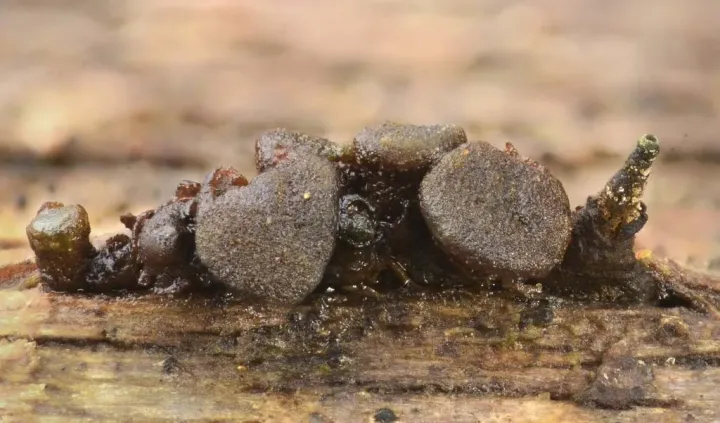
The fungus is identified by the presence of small, gregarious apothecia that emerge on the bark of infected branches or trunks. These fruiting bodies appear as small, brownish disks that break through the periderm after the host tissues have been compromised.
The fungal mycelium colonizes the cambium and inner bark layers, causing disruption to the tree's nutrient transport system. The fungus is highly adapted to the host, often remaining latent before producing sporulating structures under humid conditions.
Identification often requires careful microscopic examination of the spores, which possess distinct morphological characteristics typical of the genus Dermea. It is distinct from other species infecting different conifer families.
The biological cycle involves both sexual and asexual phases, allowing the pathogen to propagate efficiently across forest stands and nursery environments, even in the presence of varying environmental stressors.
What it damages
The pathogen specifically targets Douglas fir trees, affecting both young seedlings in nurseries and mature trees in forest plantations. It is recognized as a cause of branch cankers and bark necrosis.
The fungus typically enters the host through wounds, frost cracks, or sites damaged by insects. Once established, it triggers localized necrotic lesions that eventually girdle the affected part of the tree.
The resulting damage reduces the timber quality and structural integrity of the tree. In severe cases, particularly in younger trees, the girdling of the main stem results in tree death.
In forest nurseries, Dermea pseudotsugae can cause significant losses by infecting young transplants, leading to stunted growth or total mortality, which creates major operational and financial challenges.
Heavily infected trees exhibit reduced vigor, sparse foliage, and chlorotic needles, as the girdling of the phloem prevents the translocation of carbohydrates, causing the crown to wither and die.
Signs of infestation
The primary symptom is the appearance of depressed or cracked areas on the bark. These lesions are often surrounded by callus tissue, reflecting the host's attempt to compartmentalize the infection.
Fruiting bodies (apothecia) appear as tiny brown clusters on the necrotic bark surface. They are most conspicuous during wet weather when they swell and become more prominent against the bark substrate.
Branches located above the point of infection often show signs of premature yellowing and browning. This flagging effect is a classic indicator of a vascular obstruction caused by the spreading canker.
Upon peeling back the bark of an affected lesion, one can observe brown, necrotic phloem and xylem tissue. Fungal mycelium may also be visible as a thin, white, or brownish layer between the bark and wood.
Resin flow is frequently observed at the margins of the infected bark, as the tree responds to the fungal invasion by producing defensive resinous compounds to seal off the area.
Control measures
Effective management begins with strict sanitation practices in both forest stands and nurseries. Prompt removal and destruction of infected stems or branches are essential to reduce the inoculum load.
Maintaining proper tree spacing is crucial to ensure adequate airflow and humidity control within the canopy, as high moisture levels facilitate the germination and spread of fungal spores.
Fungicidal applications may be used preventively in nurseries during high-risk periods of sporulation. It is important to target treatments to the most susceptible growth stages to maximize efficacy.
Minimizing mechanical injury to the bark during silvicultural operations reduces the number of infection courts available to the pathogen. Proper site selection can also mitigate frost-related bark injuries.
Long-term control strategies focus on breeding for disease resistance. Selecting genetic lines of Douglas fir that demonstrate natural tolerance to Dermea species is a sustainable approach to forest health management.
Causes diseases · 1
Discussion
No discussions yet — be the first.