
Dematophora necatrix
Dematophora necatrix
Dematophora necatrix (syn. Rosellinia necatrix) is a soil-borne fungal pathogen belonging to the Ascomycota division. It is the primary cause of white root rot in many woody plants.
What the section contains
Dematophora necatrix
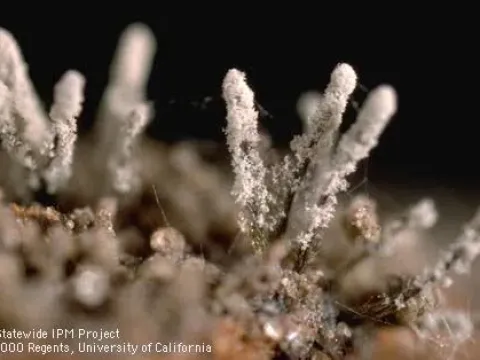
The fungus is characterized by the formation of dense, white, thread-like mycelial strands that envelope the roots of infected host plants like a web.
It produces small, black sclerotia which serve as survival structures, allowing the fungus to persist in the soil for several years even in the absence of a host.
This pathogen is a polyphage, capable of infecting a wide range of fruit trees, grapes, ornamentals, and various other plant species across the globe.
The transmission of the disease occurs primarily through infected soil, contaminated irrigation water, and the transfer of infected plant material into clean areas.
The pathogen causes severe damage to fruit trees (apples, pears, peaches), grapevine roots, and various berry crops, leading to significant economic losses.
Infected roots lose their ability to absorb water and nutrients, resulting in gradual wilting, chlorosis, and eventual death of the entire plant.
Young plants and saplings are particularly susceptible and can die rapidly when the fungus colonizes the root system completely.
In established orchards and vineyards, the disease often spreads in patches, destroying the root systems of mature trees and making the soil unfit for replanting.
The destruction of the cambium layer by the fungal mycelium causes the bark to rot and peel off, ultimately ringing the root and killing the host.
The pathogen is most active under conditions of moderate temperature and high soil moisture, commonly seen during the spring and autumn months.
While high temperatures in summer may reduce the surface activity of the fungus, it continues to develop and thrive in the deeper, moister layers of the soil.
Infection can occur throughout the growing season whenever roots come into contact with the fungal mycelium or soil containing sclerotia.
The fungus survives the winter in the form of dormant sclerotia or active mycelium residing in decaying roots or organic matter within the soil.
Periods of waterlogging are critical, as saturated soil conditions facilitate the movement of mycelial strands between the roots of adjacent plants.
Early symptoms include yellowing of the leaves, stunted growth, and a general decline in the plant's vigor, often mistaken for nutrient deficiency.
Upon exposing the root system, a thick, white, cottony mycelial mat is observed on the surface of the roots and the root collar area.
The internal tissues of the infected roots become brown, soft, and decayed, emitting a distinct, musty fungal odor as the tissues break down.
As the disease progresses, the tree or vine undergoes severe wilting, often leading to rapid leaf drop and the death of branches or the entire plant.
Black, microscopic sclerotia are often found embedded in the mycelial mat on the surface of the roots or in the surrounding soil cracks.
Strict sanitation is the most effective management strategy; infected plants must be removed completely, including all major roots, and burned or destroyed.
The soil at the site of the infected plant should be treated or left fallow, as the pathogen can persist in the soil long after the host is removed.
Improving soil drainage is essential to create an unfavorable environment for fungal development and to prevent the spread of the mycelium.
The application of biological control agents, such as beneficial Trichoderma fungi, can help suppress the pathogen population in the soil.
Before planting new trees, ensure the nursery stock is healthy and the planting site is free of previous root rot history to minimize the risk of infection.