
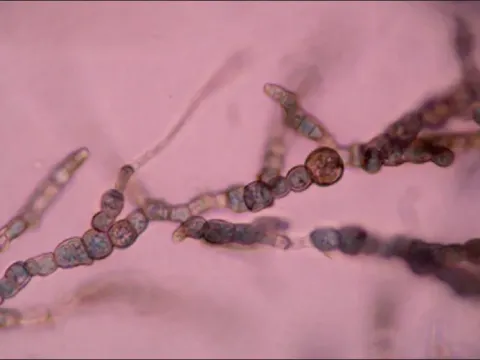
Dematiaceous fungi
Dematium
The genus Dematium represents a group of fungi known as dematiaceous fungi (Dematiaceae). They are characterized by the presence of melanin in their cell walls, which gives their mycelium and conidia a distinct olive, brown, or black color.
What the section contains
Dematiaceous fungi
Taxonomically, they are classified under the phylum Ascomycota. While many species function as saprotrophs in soil and organic matter, they can behave as opportunistic plant pathogens under favorable environmental conditions.
These fungi are notable for their resilience, as the dark pigmentation (melanin) provides significant protection against UV radiation and thermal stress, ensuring survival in diverse environments.
Laboratory identification involves microscopic examination, revealing septate, darkly pigmented hyphae and specific conidiophores. Culturing on media typically results in dark-colored colonies.
In the field, they are identified by the presence of a velvety, dark-colored mold or mycelial mat that develops on the surface of infected plant tissues during the sporulation stage.
Dematiaceous fungi affect a wide variety of crops, including grains, fruits, vegetables, and ornamentals. They often act as secondary invaders, colonizing tissues that have been previously weakened by environmental stress or other primary pests.
In fruit production, these fungi cause "black mold" or "sooty spot," which severely diminishes the marketability and shelf life of the produce, often leading to rapid tissue decay.
Cereal crops are vulnerable to infection, where the fungi may colonize the head or grain, causing dark discoloration. This reduces the quality of the harvested grain and lowers its germination vigor.
Root systems can also be compromised, particularly in waterlogged soils. Infection leads to root rot, nutrient uptake deficiency, and systemic stunting of the host plant.
Leaf infection typically manifests as dark, necrotic spots that may coalesce, eventually leading to chlorosis, tissue senescence, and premature leaf drop.
The development of these fungi is highly favored by high relative humidity (above 75%) and moderate temperatures, typically ranging between 18°C and 25°C. Moisture is the primary driver of rapid sporulation.
The most critical window for infection is during the late vegetative and ripening stages of crops, especially when high humidity coincides with the harvest period, promoting mold growth on mature crops.
The pathogen overwinters as mycelium, chlamydospores, or sclerotia within crop residues, soil, or even on weed hosts, remaining viable for several years if environmental conditions are suitable.
Dissemination of conidia during the growing season occurs primarily via wind currents, rain splash, and mechanical transport by insects or farm machinery moving through the field.
In post-harvest environments, such as warehouses, improper ventilation and high moisture levels allow the fungi to spread rapidly from infected produce to healthy lots through contact.
The most prominent sign is the development of a dark, velvety, or powdery coating on stems, leaves, or fruits. The color ranges from dark green to charcoal black.
Early symptoms include small chlorotic or necrotic spots. As the pathogen matures and produces spores, the center of these spots turns darker and may develop a fuzzy appearance.
Infected seeds often show surface discoloration and may fail to germinate, or they may emerge as weak seedlings that collapse due to pre- or post-emergence damping-off.
Plants under significant stress may exhibit localized tissue softening and decay. In fruits, this leads to wet, dark rot that can consume the entire fruit within a few days.
Systemic symptoms in severely affected plants include reduced vigor, stunted growth, and a general lack of structural integrity in the stems or leaf petioles.
Effective control starts with strict sanitation: the removal or deep burial of plant residues is essential to reduce the primary inoculum load in the field for the following season.
Seed treatment with high-quality systemic fungicides is a standard recommendation to protect emerging seedlings from soil-borne pathogens during the critical early growth phases.
In greenhouses and storage facilities, managing the environment is crucial. Maintaining low humidity through proper ventilation and precise irrigation prevents the moisture buildup necessary for fungal growth.
Foliar application of registered contact and systemic fungicides can be used during the growing season if environmental monitoring indicates high disease pressure.
Promoting general plant health through balanced fertilization and robust pest management helps prevent the secondary colonizations by Dematium, as healthy tissue is significantly less susceptible to infection.