
Deightoniella torulosa
Deightoniella torulosa
Description
How to identify
Deightoniella torulosa is an ascomycete fungus that acts as a significant plant pathogen. It is primarily known for causing leaf and fruit spots on various banana cultivars, particularly in tropical regions.
Taxonomically, the fungus belongs to the family Phaeosphaeriaceae. It survives and thrives in environments characterized by high humidity and warm temperatures, which are typical for tropical banana-growing regions.
The pathogen reproduces via conidia. These asexual spores are dispersed efficiently by wind and splashing water, allowing the disease to spread rapidly throughout a banana plantation during rainy seasons.
The fungus can overwinter or persist on decaying plant debris, including dead leaves and fruit remnants. This reservoir of inoculum serves as the starting point for infection in the new growth cycle.
The life cycle involves the germination of spores on the surface of plant tissues, followed by the penetration of the epidermis and subsequent colonization of internal cellular spaces.
What it damages
The primary host of Deightoniella torulosa is the banana plant (Musa spp.). The pathogen negatively impacts both the yield quantity and the aesthetic quality of the fruit.
Infection of the foliage disrupts photosynthesis, causing leaf tissue to die prematurely. A severe loss of healthy leaf area leads to poor bunch development and smaller fruit size.
Fruit infection is of significant commercial concern. Dark, sunken spots on the banana peel reduce the value of the produce and make it unsuitable for export markets.
The disease can cause significant economic damage, necessitating increased labor for maintenance and regular application of chemical fungicides to protect the crop.
Overall, the presence of the pathogen weakens the banana palm, making it more susceptible to environmental stress and potentially lowering the longevity of the plantation.
Signs of infestation
The disease manifests as small brown or black spots on the leaves. As the infection progresses, these spots expand, often becoming irregular or oval in shape with a dark necrotic center.
A distinctive feature of the infection is the presence of a chlorotic halo (a yellow zone) surrounding the necrotic spots on the leaves, indicating the plant's stress response to fungal toxins.
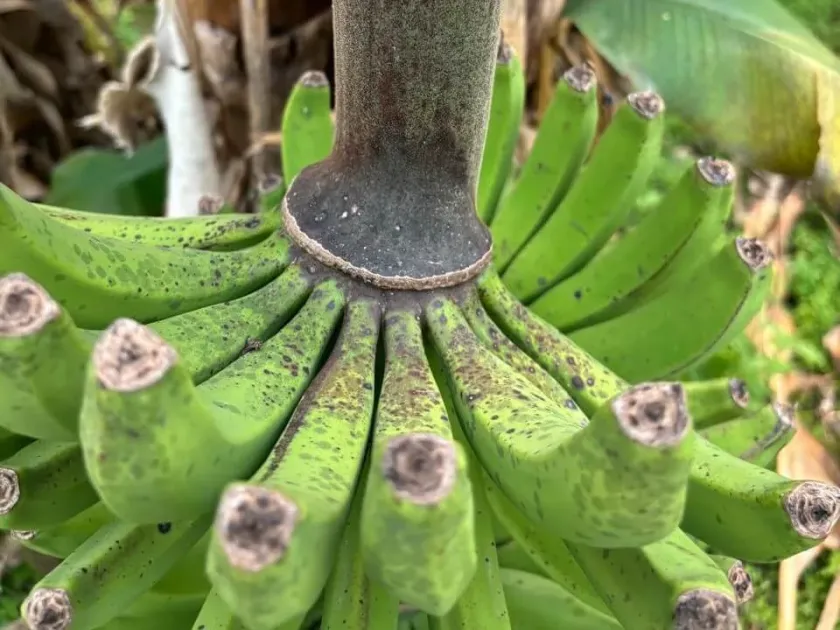
On fruits, symptoms appear as small, circular, black, sunken lesions. Under highly humid conditions, a sparse, dark, velvety growth of fungal conidiophores may be visible within the spots.
Advanced stages of the disease lead to the rolling and drying of leaves. Entire leaves may collapse, significantly reducing the vigor of the plant during the critical fruit-filling stage.
In some cases, the fungus may cause longitudinal black streaks on the pseudostem, signaling a more severe or systemic impact on the plant's vascular and structural integrity.
Control measures
Controlling Deightoniella torulosa requires a robust integrated pest management (IPM) strategy focused on sanitation and chemical intervention.
Sanitation is paramount; removing and destroying infected leaves and fruit debris helps to break the disease cycle and significantly reduce the local spore population.
Fungicide applications are commonly used to manage outbreaks. Products with protective and systemic modes of action are applied regularly, particularly during periods of high rainfall.
Optimizing plantation density and improving canopy airflow can help reduce leaf surface moisture, creating a less favorable environment for spore germination and infection.
- Use of disease-free planting material to avoid introducing the pathogen.
- Regular monitoring of plantation health to detect early infection zones.
- Balanced fertilization to boost the plant's natural systemic resistance.
Causes diseases · 2
Discussion
No discussions yet — be the first.