
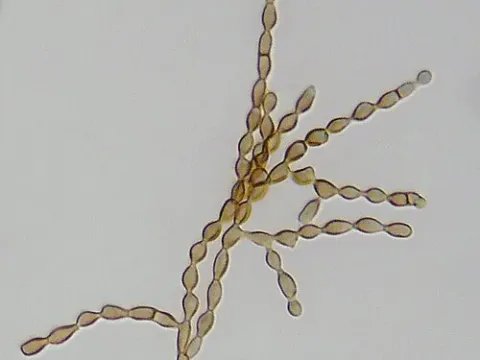
Dematium herbarum
Dematium herbarum
Dematium herbarum is a ubiquitous saprophytic, sometimes weak parasitic, fungus belonging to the hyphomycetes group. It is often classified alongside the Cladosporium genus.
What the section contains
Dematium herbarum
The fungus produces dark, often olive-black or brown mycelial colonies that appear as distinct velvety patches on the surface of colonized plant tissues.
Its hyphae are septate and heavily pigmented with melanin, which contributes to the dark, soot-like appearance of the colonies observed on plant materials.
Conidiophores are typically simple or branched, bearing chains of unicellular or bicellular conidia, which are easily disseminated by environmental factors.
Diagnostic identification usually requires microscopic observation to confirm the specific morphology of the conidia and the structure of the conidiophores.
Dematium herbarum affects a wide range of agricultural crops, including cereals, vegetables, and fruit-bearing plants, often acting as a secondary colonizer.
On cereals such as wheat and barley, the pathogen primarily affects aging or damaged leaves, accelerating the senescence process and reducing the photosynthetic area.
Vegetable crops, particularly tomatoes and cucumbers, are susceptible to the fungus after harvest or through wounds, leading to rapid tissue decay and quality loss.
In storage environments, the pathogen can cause significant economic losses by colonizing tubers, bulbs, and fruits, resulting in dark, rotting lesions.
The pathogen's impact is further amplified by its ability to produce secondary metabolites that can compromise the structural integrity of plant cell walls.
The development of this pathogen is most aggressive during the second half of the growing season, particularly under conditions of high humidity and moderate temperatures.
It overwinters as mycelium and conidia within soil debris and on infected plant parts, allowing it to survive through diverse climatic conditions.
Dissemination occurs primarily via wind and rain splashes, with the spread of spores increasing significantly following heavy precipitation events.
Optimal environmental conditions for the growth of Dematium herbarum include temperatures ranging from 15 to 25 degrees Celsius and high atmospheric moisture levels.
As early spring approaches, the overwintered conidia become active and begin the cycle of colonizing susceptible, weakened plant tissues again.
The hallmark symptom is the formation of olive-black to dark brown patches that develop a characteristic velvety texture due to profuse sporulation.
Initially, plant leaves exhibit chlorotic spots, which gradually turn necrotic, lose their turgor, and eventually dry out completely.
Affected fruit and root crops show areas of softened tissue that are rapidly covered by a dark fungal crust, indicating advanced stages of infection.
When the pathogen infects the grain head, it causes a dark discoloration of the glumes, often referred to as "black mold" when conditions remain humid.
- Velvety dark-olive or black fungal growth;
- Chlorosis and necrosis of leaf tissues;
- Soft rotting of fruits and vegetables;
- Premature yellowing and drying of foliage.
Cultural practices, such as deep plowing to bury crop residues, are essential to reduce the primary inoculum load in the field for the following season.
Implementing effective crop rotation strategies helps minimize the buildup of the pathogen in the soil and prevents its cycle from repeating continuously.
During the growing season, fungicide application—specifically using copper-based or triazole-based chemicals—can effectively manage outbreaks in high-value crops.
Post-harvest hygiene is critical, including the use of well-ventilated, low-humidity storage facilities to inhibit the growth of Dematium herbarum on harvested products.
Maintaining optimal plant nutrition, particularly with balanced micronutrients, strengthens plant tissues and reduces their susceptibility to opportunistic fungal infections.