
Diaporthe arctii
Diaporthe arctii
Diaporthe arctii is an ascomycete fungus of the Diaporthe genus, which is also associated with the Phomopsis anamorph stage.
What the section contains
Diaporthe arctii
Microscopically, it is identified by the formation of pycnidia, which produce two types of conidia: alpha-conidia (ellipsoidal) and beta-conidia (filiform).
It belongs to the order Diaporthales and the family Diaporthaceae, acting as an opportunistic yet destructive pathogen for various plant hosts.
Accurate identification requires laboratory molecular analysis, such as sequencing, because morphology often overlaps with other species in the genus.
The pathogen is highly resilient and persists for long periods in crop debris, making it a persistent challenge in agricultural environments.
The pathogen affects a diverse range of plant hosts, including several important agricultural crops, leading to significant physiological stress.
Damage is characterized by lesions on stems and leaf petioles, which obstruct the vascular system and disrupt water and nutrient uptake.
This disruption causes wilting, stunted growth, and in severe cases, the collapse of the plant due to structural weakness in the stems.
Infection can also extend to seeds, reducing the germination rate and vigor of the next generation of crops.
Plants weakened by environmental stress or secondary pests are particularly susceptible to severe colonization by the fungus.
Development typically begins during the growing season when temperatures rise into the +18 to +25 degrees Celsius range.
High humidity and rainfall are essential for the dispersal of conidia and the infection of healthy plant tissues via splashing water.
The fungus overwinters as mycelium or dormant pycnidia on infected crop residues left in the field from the previous harvest.
Primary infections occur in the spring, triggered by favorable moisture levels that facilitate the release of spores onto young seedlings.
Secondary cycles occur throughout the summer, allowing the disease to spread rapidly across fields under humid weather conditions.
Symptoms often manifest as dark, necrotic lesions on the stem base, which later expand into discolored, sunken areas.
Leaves may show chlorosis (yellowing), followed by wilting, as the fungus restricts the movement of nutrients from the roots upward.
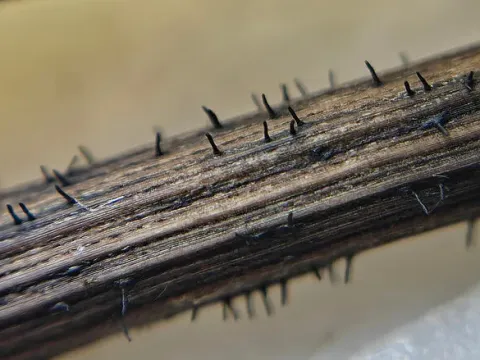
Small, black, pimple-like structures, which are the pycnidia, eventually appear on the surface of the lesions.
- Necrotic spots appearing on the stems or at leaf junctions.
- Structural failure leading to lodging or snapping of the stems.
- Reduced plant height and overall biomass compared to healthy controls.
The presence of these signs, particularly the pycnidia, is a clear indicator of the fungal colonization of the host tissue.
Effective management starts with rigorous crop rotation to break the life cycle of the fungus and reduce inoculum levels in the soil.
Deep plowing and proper residue management are critical to bury infected plant material and prevent it from serving as a source of infection.
Using high-quality, disease-free seed and applying appropriate seed treatments can significantly improve the establishment of healthy crops.
Fungicide applications are recommended during the early stages of infection when climatic conditions favor fungal growth and spread.
Integrated weed management is also necessary, as many common weeds can act as alternative hosts for Diaporthe species.