
Diaporthe aspalathi
Diaporthe aspalathi
Description
How to identify
Diaporthe aspalathi is an ascomycete fungus within the Diaporthaceae family, recognized as a significant plant pathogen. It is frequently associated with complex stem and pod blight diseases in leguminous crops, particularly in soybeans.
The fungus is characterized by the production of perithecia within host tissues and the development of both alpha and beta conidia. This polymorphic reproductive system is a hallmark of the Diaporthe genus, aiding its survival across different environmental conditions.
Systematic classification: Kingdom Fungi, Phylum Ascomycota, Class Sordariomycetes, Order Diaporthales, Genus Diaporthe.
Accurate identification often requires molecular tools like PCR, as the morphological characteristics overlap with other Diaporthe species. Agronomists must distinguish it from closely related fungi to ensure effective management protocols.
This pathogen has a wide distribution in subtropical and temperate regions, often emerging as a limiting factor in high-yield leguminous production systems.
What it damages
Soybeans (Glycine max) are the primary commercial crop affected by Diaporthe aspalathi. The fungus can also colonize lupins and various weed species, which act as alternative hosts in agricultural landscapes.
The pathogen primarily infects the stem base, interfering with vascular transport. By damaging the xylem and phloem, the fungus causes wilting, stunted growth, and eventual plant death.
Economic losses are driven by reduced yield, lower seed quality, and the presence of infected seeds that do not meet commercial standards. In severe cases, plant lodging makes mechanical harvesting extremely difficult.
Secondary damage includes pod infection, where the fungus directly colonizes the fruit, leading to seed decay and poor germination potential for the following season.
The overall impact on crop development is cumulative; as the pathogen progresses, the plant's ability to fill pods effectively is severely compromised, resulting in significant weight loss of the harvest.
When it appears
Diaporthe aspalathi survives during the off-season as mycelium and fruiting bodies (pycnidia and perithecia) on infected crop debris left on the soil surface or incorporated into the upper soil layer.
Infection cycles are initiated in the spring when temperatures and moisture levels become conducive to fungal growth. Conidia are disseminated via rain splash and wind to susceptible plant parts.
The most critical window for infection is during the reproductive stages (R1-R6 in soybeans). High humidity and moderate to warm temperatures (20–28°C) significantly accelerate the spread and colonization rate.
As the season nears its end, the fungus produces overwintering structures, preparing the pathogen to persist for the next year in the same field.
Rainfall patterns are the primary driver of disease severity; sustained wet weather during the flowering period consistently correlates with higher incidences of stem canker and blight.
Signs of infestation
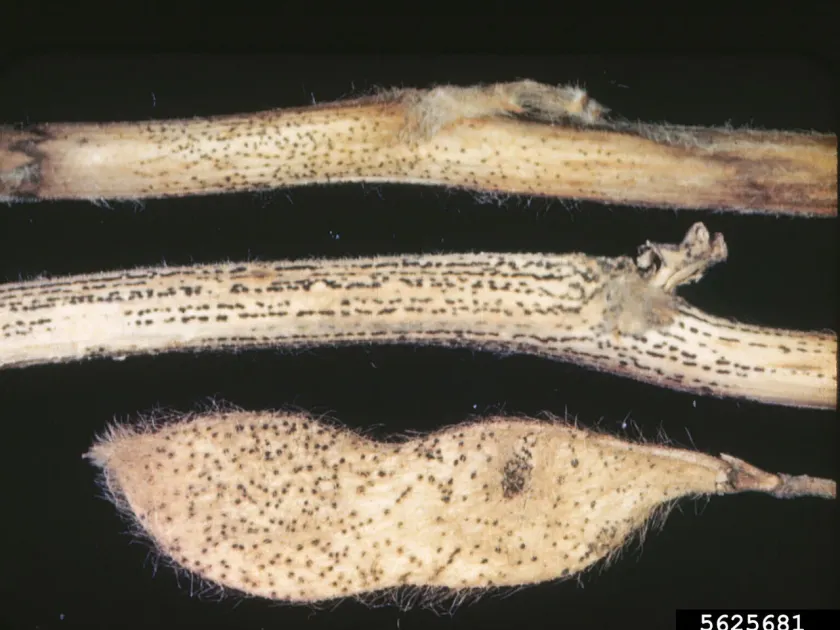
The initial signs of infection are small, brown, necrotic lesions on the lower stems. Over time, these lesions expand and can girdle the stem, restricting nutrient and water flow.
The development of small, black, dot-like fruiting bodies (pycnidia) within these lesions is a definitive visual indicator of the disease during field scouting.
Leaf symptoms often appear as interveinal chlorosis, which progresses to necrosis. This is a physiological response to the toxins produced by the fungus during its colonization of the stem.
- Dark brown, sunken lesions on stems
- Presence of black pycnidia
- Premature yellowing and wilting of leaves
- Reduced seed fill and pod number
- Internal browning of the stem pith
When the stems are split longitudinally, one can observe distinct internal discolouration and tissue degradation, confirming the presence of a stem-rotting pathogen.
Control measures
Crop rotation is the foundation of management for Diaporthe aspalathi. A rotation interval of at least three to four years without host legumes significantly reduces the soil-borne inoculum.
Using high-quality, fungicide-treated certified seeds is essential to prevent the introduction of the pathogen into disease-free fields via infected seed lots.
Deep tillage helps to bury and decompose crop residues, accelerating the death of the fungal mycelium and reducing the potential for early-season inoculum release.
Fungicide applications, particularly using triazole or strobilurin chemistries during the flowering stage, can be effective if the disease risk is high and weather conditions favor the pathogen.
Breeding for genetic resistance remains the most sustainable approach, as resistant cultivars can largely mitigate the impact of the disease without increasing reliance on chemical inputs.
Causes diseases · 1
Discussion
No discussions yet — be the first.