
Diaporthe caulivora
Diaporthe caulivora
Diaporthe caulivora is a fungal plant pathogen belonging to the kingdom Fungi, phylum Ascomycota, and genus Diaporthe. It is recognized as the primary agent of soybean stem canker.
What the section contains
Diaporthe caulivora
The fungus is capable of surviving for long periods in soil and on crop residues, maintaining a saprophytic lifestyle until it encounters suitable host tissues.
Initial infection often originates from infected seeds, where the mycelium can persist within the seed coat or the embryonic tissues.
During the growing season, the pathogen spreads through conidia, which are dispersed by rain splashes and wind currents, facilitating the movement of the infection between plants.
The biological life cycle includes a sexual stage characterized by the formation of perithecia on dead stems, which ensures the survival of the fungus through adverse winter conditions.
The primary host for this pathogen is soybean (Glycine max). The disease affects the stems, pods, leaves, and overall root system of the plant, leading to significant physiological stress.
Damage manifests as plant wilting and premature death. In severe cases, growers can experience yield losses exceeding 50% due to widespread crop failure within the field.
The fungus produces toxic metabolites that clog the plant's vascular system, preventing the transport of essential water and nutrients to the developing pods.
Seeds harvested from heavily infested plants exhibit poor germination rates and reduced weight, frequently carrying the pathogen into the next season.
Weakened stems become susceptible to lodging, which not only stunts the plant's final development but also creates significant challenges for mechanical harvesting operations.
Infection activity is highest during periods characterized by high relative humidity and moderate air temperatures, generally ranging from +20°C to +28°C.
The vegetative stages from flowering through pod filling are critical, as the plant's susceptibility peaks during these physiological phases.
Prolonged rainfall events create the ideal moist microenvironment necessary for spores to germinate on the plant surface and successfully invade the tissues.
While drought conditions may temporarily slow the progression of the disease, the fungus remains viable, ready to resume infection once moisture levels rise.
As the season progresses toward maturity, the pathogen accumulates significantly on crop debris, establishing a strong reservoir for future infection.
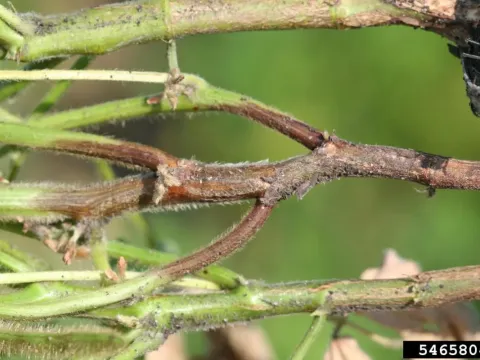
The hallmark sign of the disease is the development of brown necrotic lesions near the stem nodes, which gradually expand into dark cankers.
- Darkening and cracking of the outer stem bark.
- Yellowing and wilting of leaves that remain attached to the plant stem.
- Internal browning and degradation of the stem pith.
- Visible formation of tiny black dots (pycnidia and perithecia) on the stem surface.
Infected pods often appear stunted and shriveled, with dark spots indicating the presence of fungal mycelium growing on the pod surface.
The primary defense strategy involves the use of high-quality, certified seeds combined with rigorous fungicide seed treatments to prevent early-stage infection.
Implementing an effective crop rotation strategy, with a gap of at least 3 to 4 years before planting soybeans again, significantly reduces soil-borne inoculum.
Deep tillage practices that bury crop residues are highly recommended to accelerate the decomposition process and minimize the survival of the fungus in the field.
Foliar application of systemic fungicides, particularly during the flowering stage, provides essential protection against the spread of Diaporthe caulivora.
Selecting and planting genetically resistant or tolerant soybean varieties is the most sustainable and cost-effective approach for long-term disease management.