
Colletotrichum truncatum
Colletotrichum truncatum
Colletotrichum truncatum is a fungal plant pathogen within the Ascomycota phylum, responsible for causing anthracnose on a wide range of legume crops. It is taxonomically identified as a member of the genus Colletotrichum, which includes numerous economically significant species.
What the section contains
Colletotrichum truncatum
The fungus is characterized by the production of acervuli, which are specialized saucer-shaped structures containing conidiophores. The conidia produced are typically falcate or sickle-shaped, which serves as a definitive morphological feature for identification.
As an aggressive pathogen, it employs a hemibiotrophic lifestyle, initially colonizing host tissues without causing immediate cell death, followed by a necrotrophic phase where it destroys host cells to obtain nutrients.
The survival of the pathogen is facilitated by its ability to persist in soil, on crop debris, and within infected seeds for extended periods, making it highly resilient to environmental stressors.
This pathogen possesses high genetic diversity, which contributes to the development of different strains with varying levels of virulence across different geographic regions.
Colletotrichum truncatum primarily targets the Fabaceae family, with soybeans being the most impacted crop. Other hosts include various beans, lentils, and peas, leading to significant reductions in agricultural output globally.
Damage can occur at any growth stage, from seedling emergence to maturity. Infected seeds often fail to germinate or result in stunted, diseased seedlings, which can lead to poor plant stands in the field.
In mature plants, the pathogen causes severe tissue necrosis on stems, pods, and leaves. This disrupts the plant's vascular system, leading to premature leaf drop and the development of shriveled, low-quality seeds.
In cases of high infestation, the pathogen can cause pod rot, significantly reducing seed yield and overall market quality. This makes the harvested grain less suitable for processing or replanting.
Economic losses are often substantial, particularly in humid regions where the pathogen can spread rapidly through entire fields during favorable weather conditions.
The disease is most prevalent during warm and wet growing seasons. High humidity and rainfall are essential for the germination of conidia and the subsequent infection process of the host plant.
Optimal temperatures for pathogen development range between +20°C and +28°C. Within this temperature bracket, the fungus can complete its life cycle rapidly, enabling multiple infection cycles throughout the season.
Primary inoculum sources include infected seeds and previous year's crop residues. Rain splash and wind are the primary vectors for the secondary spread of conidia from lower canopy leaves to healthy tissues.
Flowering and pod-filling stages are the most critical periods for crop protection, as plants exhibit increased susceptibility and the environmental conditions often favor fungal growth.
By the end of the season, the fungus produces resting structures that remain dormant until the next planting season, ensuring the continued survival of the inoculum in the field.
Initial symptoms include the appearance of dark, irregular lesions on stems and petioles. These lesions often expand and coalesce, eventually causing the stem to blacken and weaken.
Leaf infection typically manifests as small necrotic spots that may be surrounded by yellow chlorotic tissue. In advanced stages, the central parts of these spots may dry out and tear.
The presence of acervuli is a hallmark of this disease; they appear as tiny, dense black dots on the infected surfaces, often accompanied by dark, hair-like structures called setae.
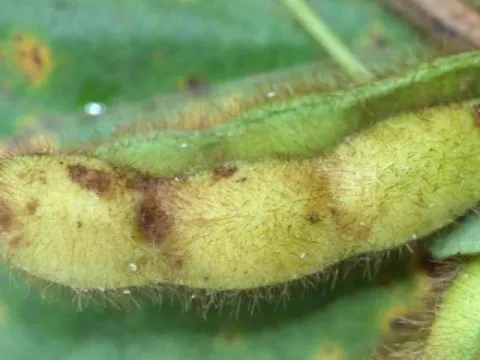
Pods show dark, sunken lesions that can penetrate through to the seeds inside. When split open, the interior of the pods may reveal white, fluffy mycelial growth and blackened, rotting seeds.
Overall plant health declines, characterized by stunted growth, premature yellowing, and the characteristic death of plant tips (dieback) before harvest.
Management strategies focus on a multi-faceted approach, starting with the use of certified, disease-free seed. Seed treatments with systemic fungicides are essential to protect against early infection.
Cultural practices such as crop rotation are vital to break the life cycle of the pathogen and reduce the inoculum density in the soil. Avoiding continuous cropping of soybeans is a key preventative measure.
Field sanitation, including the thorough burial of crop residues, helps reduce the carry-over of the fungus. Deep plowing can bury infected debris to a depth where the fungus is less likely to survive.
Fungicide applications during the reproductive stages of the crop can effectively suppress the disease, especially when applied at the first signs of symptoms.
- Planting resistant or tolerant soybean varieties.
- Controlling weeds that may harbor the fungus.
- Managing plant density to promote airflow and reduce canopy humidity.
- Using integrated pest management (IPM) to balance chemical use with environmental health.