
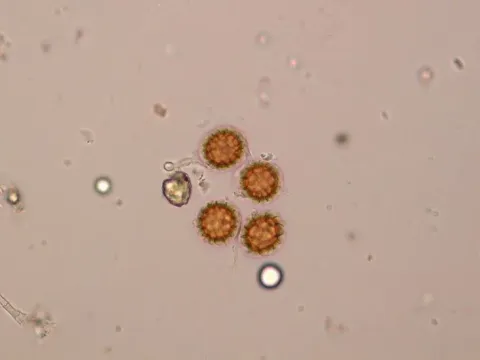
Common bunt of wheat
Tilletia caries
Common bunt of wheat is a fungal disease caused by the basidiomycete Tilletia caries (often found in association with Tilletia laevis). This pathogen belongs to the order Ustilaginales and is an obligate parasite.
What the section contains
Common bunt of wheat
The fungus survives as teliospores, which remain viable on the seed surface or in the soil for several years, depending on environmental conditions.
Infection is restricted to the seedling stage, specifically from the germination of the wheat grain until the development of the first leaf (the coleoptile stage).
The mycelium grows systemically within the plant, moving upwards through the stem towards the growing point, remaining asymptomatic throughout the vegetative phase.
During the grain-filling stage, the fungus invades the ovary, replacing the healthy endosperm with a dense mass of black spores known as bunt balls.
The disease affects various wheat species, including bread wheat and durum, as well as some wild grasses, which can serve as alternative hosts.
The primary economic impact is the direct loss of grain yield, as infected heads fail to produce viable flour-producing grain, resulting in significant total harvest reduction.
The market value of the crop is severely compromised by the presence of teliospores, which taint the grain with a strong fishy, metallic odor due to trimethylamine.
Contaminated wheat becomes unsuitable for human consumption or livestock feed, as the spores can be toxic and degrade the quality of flour in milling processes.
Additionally, the spread of spores during harvesting operations poses a risk of further contamination, often requiring the sanitization of equipment and storage facilities.
Infection occurs predominantly during the early stages of crop development, when soil moisture and temperature are favorable for spore germination.
Cool, moist soil conditions—typically between 5°C and 12°C—are ideal for the pathogen to successfully infect emerging wheat seedlings.
Early-planted winter wheat is often at higher risk if the autumn remains cool and wet, as seedlings remain in the susceptible growth stage for a longer duration.
The longevity of teliospores in the soil ensures that the pathogen can cause outbreaks even after several years of crop rotation, provided the conditions are right.
Shallow planting depths can sometimes help mitigate infection risks, as it allows seedlings to emerge more quickly, shortening the window of vulnerability.
Affected plants often exhibit a slightly stunted growth habit, and their heads frequently remain green longer than those of healthy, maturing plants.
The glumes of infected spikes may spread wider than usual, giving the head a disheveled or loose appearance due to the pressure from the developing bunt balls.
Upon closer inspection, the grains are seen to be shorter, plump, and grayish-brown, filled with a powdery mass of black spores instead of a white starchy endosperm.
A distinctive, persistent fishy smell, reminiscent of decaying herring, is the most reliable indicator of a common bunt infestation in the field or the bin.
- Blue-green tint to the maturing heads.
- Grain replaced by black spore masses (bunt balls).
- Presence of a distinct fishy odor.
- Fragile, easily broken grain structure.
- Spore clouds released during harvesting.
The most effective strategy for managing common bunt is the systematic treatment of seeds with broad-spectrum fungicides prior to sowing.
Crop rotation serves as a critical cultural practice to reduce the density of viable spores in the soil, preventing the build-up of the pathogen over successive seasons.
Utilizing resistant wheat cultivars is highly recommended, as genetic resistance provides a durable and cost-effective barrier against fungal infection.
Proper field management, including the use of certified, disease-free seed, is essential to prevent the initial introduction of the pathogen into new areas.
Strategic timing of planting to avoid cool, wet conditions for germination can significantly lower the incidence of infection in high-risk environments.