
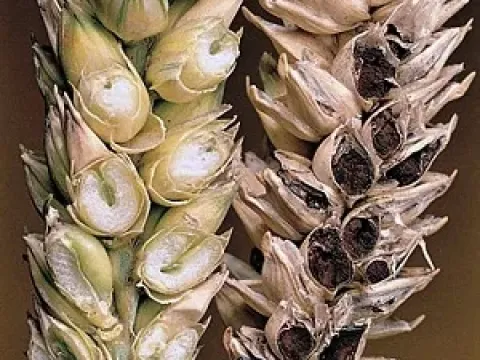
Common bunt of wheat
Tilletiacaries
Common bunt, or stinking smut, is caused by the basidiomycete fungus Tilletia caries. This pathogen is a major threat to wheat cultivation worldwide, specializing in infecting the ovaries of wheat plants.
What the section contains
Common bunt of wheat
The fungus survives as teliospores on the surface of seeds or within the soil. Infection occurs during the germination stage, specifically when the wheat seedling is between the seed and the soil surface, known as the coleoptile stage.
The fungus develops systemically within the plant host, growing alongside the apical meristem. It reaches the developing ovary, where it replaces the grain tissues with a dense mass of black, powdery spores.
Temperature and moisture are critical for the infection process. Tilletia caries thrives in cool, moist soil conditions, typically favoring temperatures between 5 and 12 degrees Celsius at the time of planting.
The teliospores are spherical with a reticulate wall. When crushed, they release a distinct odor resembling rotting fish, which is due to the presence of trimethylamine, a key identifier for this disease.
The primary damage occurs within the head, where the grain is replaced by bunted kernels. These kernels are filled with fungal spores rather than starch and gluten, causing significant quantitative yield loss.
Additionally, common bunt severely impacts grain quality. The presence of spores in the harvested crop results in contaminated grain that emits an unpleasant odor and discolors flour, rendering it unsuitable for food production.
Symptoms become apparent at maturity when infected heads appear slightly different from healthy ones. The glumes may spread apart more widely due to the enlarged, bunted kernels inside.
Infected plants often remain green longer than healthy plants. Furthermore, infected heads tend to stay erect, as they lack the weight of normal, starch-filled kernels, unlike healthy ears which typically arch downward.
The most effective strategy is the use of systemic fungicide seed treatments, which protect the seedling during the vulnerable emergence phase. Ensuring thorough coverage of the seed is essential for efficacy.
Strategic management also includes choosing resistant wheat varieties and optimizing sowing dates to avoid soil conditions favorable for fungal growth. Crop rotation and sanitation of harvesting equipment further minimize the spread of spores.