
Colletotrichum nymphaeae
Colletotrichum nymphaeae
Colletotrichum nymphaeae is a fungal plant pathogen belonging to the genus Colletotrichum. It is recognized as a significant causative agent of anthracnose, a disease that affects a diverse range of crops, particularly strawberries and ornamental water lilies.
What the section contains
Colletotrichum nymphaeae
The pathogen reproduces via asexual conidia produced in specialized structures called acervuli. These conidia are typically hyaline and unicellular, and their specific dimensions and shape are used by mycologists to distinguish them from other closely related species within the complex.
This fungus exhibits strong survival capabilities in the environment. It persists in soil, on infected crop debris, and within asymptomatic planting stock, allowing it to re-emerge during favorable growing seasons.
Development of the fungus is highly temperature-dependent, with optimal growth occurring between 20°C and 28°C. High humidity and leaf wetness are essential for spore germination, penetration of host tissues, and subsequent colonization.
Transmission occurs through various vectors, including water splashes from rain or irrigation, wind, infected tools, and insects. Once it gains entry into a host plant, it quickly colonizes tissue, spreading rapidly in moist environments.
The pathogen is highly destructive, capable of causing significant yield losses in commercial strawberry production and ornamental horticulture. It attacks all aerial parts of the plant, including leaves, stems, flowers, and fruits.
Leaf infection causes necrosis and premature defoliation, which severely limits the photosynthetic capacity of the plant. This loss of vitality leads to stunted growth, reduced berry size, and a significant decrease in overall yield potential.
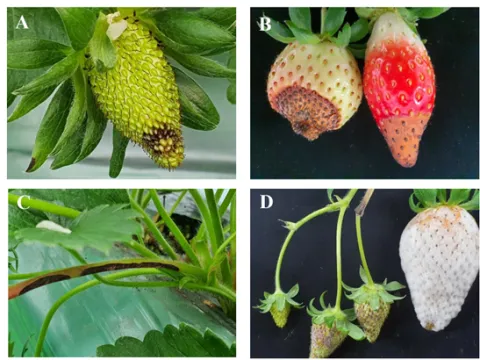
Floral and fruit infections are the most economically damaging phases. The fungus infects the flower stalks, causing them to collapse, and produces sunken, necrotic lesions on developing berries, rendering them completely unmarketable.
In severe cases, the fungus systemically infects the crown of the strawberry plant, leading to total plant collapse and death. This can result in localized epidemic outbreaks that necessitate the destruction of entire plant beds.
Post-harvest losses are also a major concern, as latent infections on seemingly healthy fruits often manifest as rapid decay during shipping and storage, causing substantial economic losses for producers and distributors.
Initial symptoms include the appearance of small, dark-brown or black spots on the leaves. As the infection progresses, these lesions enlarge and often develop a darker, more defined border.
Stems, petioles, and flower stalks exhibit characteristic sunken, elongated, dark-colored lesions (cankers). These lesions weaken the stalks, often causing them to snap or wilt, effectively cutting off nutrient flow to the plant parts above the point of infection.
Under conditions of high humidity, pinkish or salmon-colored spore masses, known as acervuli, become visible on the surface of the lesions. This is a definitive sign of active sporulation and indicates a high risk of further spread.
Infected fruits show circular, depressed lesions that enlarge rapidly. In the final stages, these fruits become desiccated and mummified, often covered with a dense layer of fungal spores.
- Dark necrotic leaf spots
- Sunken lesions on petioles and flower stalks
- Pinkish spore masses on diseased tissue
- Rapid wilting and death of entire plant stems
The primary control strategy is the use of pathogen-free, certified planting material. Rigorous inspection of new stock before introduction to the farm is essential to prevent the introduction of the disease.
Good agricultural practices are crucial, including the regular removal and destruction of crop residues where the fungus may overwinter. Improving airflow through canopy management and weed control significantly reduces local humidity levels.
Chemical control involves the strategic application of fungicides. It is recommended to use systemic products during high-risk periods, rotating different chemical classes to delay the development of fungicide resistance in the pathogen population.
Biological control agents, such as beneficial fungi or bacteria like Trichoderma or Bacillus species, are increasingly used to suppress Colletotrichum populations in integrated pest management programs, especially during the fruit-ripening stage.
In protected cultivation environments, maintaining proper ventilation and avoiding overhead irrigation can effectively limit the spread of the disease. Utilizing drip irrigation systems minimizes leaf and stem wetness, which is necessary for the pathogen's life cycle.