
Common bunt of wheat
Tilletiacaries tritici
Description
How to identify
The causative agent of common bunt is the fungus Tilletia caries, which belongs to the kingdom Fungi, phylum Basidiomycota. This pathogen is a highly specialized parasite that exclusively affects wheat and some related grass species.
The fungal life cycle begins when teliospores germinate in the soil or on the seed surface. Infection takes place during the seedling stage, specifically attacking the plant before the coleoptile emerges from the ground.
The fungus develops systemically within the plant tissues as mycelium. It travels upward through the stem to the developing head without causing visible symptoms, remaining hidden until the grain maturation phase.
Inside the wheat kernel, the mycelium replaces the starch and endosperm with a dense mass of black teliospores. This resulting structure is known as a bunt ball, which mimics the shape of a normal kernel.
These spores are extremely resilient and can survive in the soil or on seeds for several years. This persistence makes the pathogen a constant threat to wheat fields if not managed through rigorous agricultural practices.
What it damages
Common bunt causes significant yield losses by converting the entire grain content into spore masses. This reduces the weight and volume of the harvest, directly impacting the profitability of wheat production.
The disease also ruins the quality of the harvested grain. The spores contain trimethylamine, which imparts a distinct, unpleasant "fishy" odor, making the grain unsuitable for flour production and human consumption.
Severely infected plants often show stunted growth, reduced vigor, and increased tillering. These physiological changes lead to overall poor field performance and uneven crop development.
Harvesting infected fields leads to the dispersal of spores, which contaminate healthy grain during the threshing process. This creates a massive logistics problem, requiring expensive cleaning and decontamination of storage facilities.
Farmers face substantial financial losses not only from yield reduction but also from the increased cost of fungicide treatments, mandatory quality testing, and the potential rejection of grain shipments at elevators.
When it appears
The disease development is heavily influenced by environmental conditions during planting. Infection is most severe when soil temperatures remain between 5 and 12 degrees Celsius during germination.
Cool, moist soil conditions are ideal for the pathogen, as they slow down the emergence of wheat seedlings, extending the period during which the plant is vulnerable to the fungal infection.
The spread of the disease occurs primarily during the harvest season. Mechanical impact breaks the bunt balls, releasing millions of spores that coat the soil and contaminate harvesting equipment for the next season.
During the vegetative growth stage, the fungus remains dormant or hidden. Symptom manifestation occurs only later, during the grain-filling period, when the visual transformation of kernels takes place.
Wind-blown spores can also transport the pathogen between adjacent fields, and contaminated farm machinery acts as a major vector for moving the inoculum across different regions and farming operations.
Signs of infestation
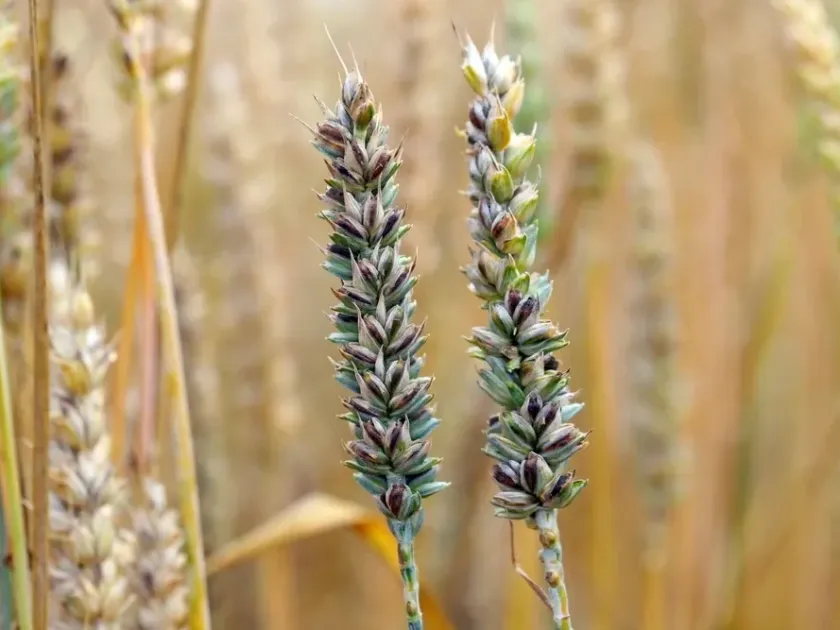
In the field, infected wheat heads often stay green longer than healthy ones. The glumes on the bunt-affected heads tend to spread apart, showing the bunt balls that have replaced the normal grains.
Visually, the heads may appear slightly lighter in weight or display a bluish-green tint before maturing. Upon closer inspection, the kernels feel harder and more compact than healthy grain.
A telltale sign is the dark-colored powder (teliospores) that escapes if a bunt ball is crushed. This powder is accompanied by a pungent fishy smell, which is the most reliable field indicator of the disease.
In mature crops, the infected ears may remain erect even when the grain heads should be nodding. This structural change is caused by the different density of the spore-filled kernels compared to normal starch-filled grains.
The presence of fine dark dust on the leaves or stems of wheat plants near harvest time is another clear indication of bunt spore dispersal within the canopy of the crop.
Control measures
The primary control measure is the use of chemical seed treatments. Systemic fungicides applied before planting provide effective protection against both seed-borne and soil-borne spores of Tilletia caries.
Cultural practices, such as crop rotation, are essential for managing soil-borne inoculum. Growing non-host crops for at least two to three years helps reduce the spore concentration in the soil.
Timing the planting date is crucial; avoiding cool and wet soil conditions at the time of sowing can significantly reduce the infection rate by ensuring faster seedling emergence.
Utilizing genetically resistant or tolerant wheat varieties is an effective strategy to mitigate the impact of the disease without relying solely on chemical inputs.
- Cleaning and grading seeds to remove infected bunt balls.
- Using high-quality, certified seeds free from bunt contamination.
- Ensuring proper spatial isolation between fields.
- Regular field scouting during the grain development stages.
Causes diseases · 1
Discussion
No discussions yet — be the first.