
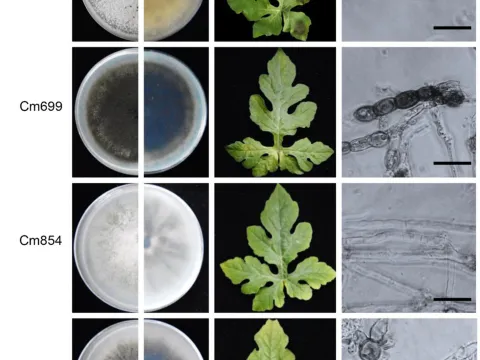
Colletotrichum magnum
Colletotrichum magnum
Colletotrichum magnum is a significant fungal plant pathogen belonging to the phylum Ascomycota. It is a well-known agent of anthracnose, a disease that affects a wide variety of crops worldwide, impacting both quality and yield significantly.
What the section contains
Colletotrichum magnum
The fungus is characterized by its asexual reproduction stage, forming acervuli which are saucer-shaped fruiting bodies containing conidia. These conidia are usually disseminated by splashing water, rain, or human activities during agricultural field operations.
Its biological cycle is highly dependent on environmental humidity and temperature. The fungus produces appressoria, specialized structures that allow it to exert mechanical pressure to penetrate plant cuticles and initiate infection in host tissues.
This pathogen survives in the soil as mycelium or chlamydospores in plant debris for several seasons. It colonizes host tissue by secreting enzymes that break down cell walls, allowing the fungus to feed on nutrients released from the plant cells.
The development of Colletotrichum magnum is favored by warm and humid weather conditions, particularly temperatures between 22 and 28 degrees Celsius, which accelerate the formation of new spores and the rapid spread of the disease.
The fungus causes severe damage to numerous plant species, primarily vegetable crops such as cucurbits and solanaceous plants. The injury is manifested as lesions that disrupt water and nutrient transport throughout the host plant.
Symptoms typically start as small, water-soaked spots on leaves and stems. As the infection progresses, these spots turn necrotic, appearing as dark, sunken lesions that may contain orange or pinkish spore masses during wet weather conditions.
In fruits, the infection leads to circular, dark-colored pits that can cause premature rotting. Severe infections result in defoliation, wilting of stems, and, in many cases, total crop failure if management measures are not implemented promptly.
Effective management of Colletotrichum magnum requires an integrated pest management (IPM) approach. This includes the use of disease-free seeds and planting resistant cultivars to reduce the initial inoculum level in the field.
Cultural practices are critical, including the removal and destruction of crop residues where the pathogen can overwinter. Implementing proper irrigation systems that avoid wetting the foliage helps to prevent the spread of conidia.
- Crop rotation with non-host species to break the pathogen's life cycle.
- Application of protective fungicides during periods of high humidity.
- Maintaining optimal spacing between plants to improve air circulation.
- Sanitation of farming tools to prevent cross-contamination between fields.