
Common bunt
Tilletia foetida
Description
How to identify
Common bunt of wheat is caused by the basidiomycete fungus Tilletia foetida (also known as Tilletia laevis). It is a major seed- and soil-borne disease affecting wheat crops worldwide.
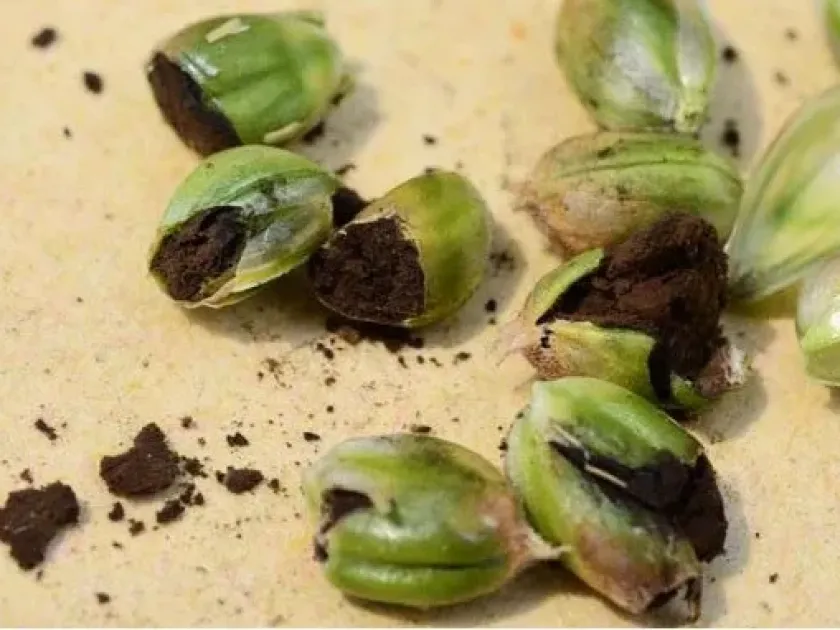
The pathogen is characterized by the formation of bunt balls, which replace the grain kernels. These balls are filled with a dark, powdery mass of teliospores that emit a distinct fishy odor due to the presence of trimethylamine.
The fungus is an obligate parasite that infects the wheat seedling during the germination stage. The mycelium then develops systemically within the plant as it grows.
Unlike other fungal diseases that cause visible lesions on leaves or stems, common bunt remains hidden inside the plant until the heading stage, making early diagnosis difficult without testing.
Under a microscope, the teliospores of T. foetida appear smooth, distinguishing them from the reticulated spores of other related bunt species.
What it damages
The primary host for this pathogen is common wheat, although it can occasionally infect other related grasses. The disease causes significant yield losses by converting the entire content of the grain into spores.
Infected spikes often remain green longer than healthy ones and appear slightly deformed. The glumes may spread apart more widely due to the swelling of the bunt balls within the spikelets.
The economic impact is twofold: direct yield reduction and the loss of grain quality. Flour produced from bunted grain is contaminated with spores, causing discoloration and a foul, fishy smell that renders it inedible.
High levels of spore contamination during harvest can lead to the rejection of grain shipments at commercial elevators and processing facilities.
Furthermore, the spread of spores from bunt balls to healthy grains during mechanical harvesting increases the inoculum load for the next planting season.
When it appears
Infection occurs exclusively during the germination phase of the wheat seed. The fungus penetrates the young seedling before it emerges from the soil.
Cool and moist soil conditions at the time of planting are ideal for the teliospores to germinate and successfully infect the seedling coleoptile.
After the initial infection, the fungus continues its systemic development throughout the plant's life cycle. It tracks the growth of the host towards the apical meristem.
During the flowering stage, the fungus invades the developing ovaries, replacing the endosperm and embryo with spore masses. This process is synchronized with the physiological development of the wheat plant.
The disease cycle is completed when the spores are released during threshing, where they contaminate the soil and the surface of healthy seeds, ready to initiate a new infection cycle.
Control measures
The most effective strategy for managing common bunt is the use of high-quality, fungicide-treated seeds. Systemic seed dressings are essential to protect the seedling during its most vulnerable stage.
Choosing resistant or tolerant wheat varieties is a highly recommended practice for integrated pest management, significantly reducing the reliance on chemical treatments.
Proper crop rotation is necessary to manage soil-borne inoculum, although teliospores usually survive for only a few years in the absence of a host.
Agronomic practices, such as optimizing planting dates to avoid soil temperatures that favor pathogen development, help mitigate the risk of infection.
- Thorough cleaning of grain to remove light-weight bunt balls.
- Application of systemic fungicides like triazoles or carboxins.
- Ensuring proper seed depth to promote rapid emergence and reduce the time the seedling is susceptible to infection.
Causes diseases · 1
Discussion
No discussions yet — be the first.