
Colletotrichum gloeosporioides
Colletotrichum gloeosporioides
Description
How to identify
Colletotrichum gloeosporioides is an ascomycete fungus and a globally significant phytopathogen. It is the primary causal agent of anthracnose, a severe disease affecting a vast array of agricultural and horticultural crops worldwide.
Taxonomically, it belongs to the Kingdom Fungi, Phylum Ascomycota, and Genus Colletotrichum. The pathogen reproduces primarily through conidia, which are produced in structures called acervuli that erupt through the host's epidermal tissue.
This fungus is characterized as a hemibiotroph, meaning it can survive in host tissues as a latent infection without causing visible damage, only to transition to a necrotrophic lifestyle when environmental conditions or host maturity become favorable.
It is remarkably adaptable, capable of surviving on living host tissues as well as on crop debris and in the soil, which makes it a persistent threat in both open-field agriculture and greenhouse environments.
Identification is confirmed through culture-based methods where the fungus produces distinctive fluffy to matted colonies on potato dextrose agar, typically developing masses of orange-colored spores as it matures.
What it damages
This pathogen is a polyphage with a host range spanning hundreds of plant species. It is particularly devastating for tropical fruits such as mango, avocado, and papaya, as well as citrus, strawberries, grapes, and various vegetables.
The fungus causes necrotic lesions on leaves, stems, flowers, and fruits. In fruits, it leads to deep, sunken decay, which not only ruins the appearance but also renders the produce inedible and economically unmarketable.
A major economic impact arises during post-harvest storage. Latent infections acquired in the field often remain dormant until the fruit begins to ripen, at which point the pathogen rapidly destroys the tissue, leading to high spoilage rates.
Furthermore, the pathogen causes leaf drop, dieback of shoots, and reduced photosynthetic capacity, which weakens the plant significantly and increases its vulnerability to secondary pests and environmental stressors.
In addition to physical damage, certain strains are capable of producing mycotoxins, which can pose food safety risks, necessitating rigorous management of the pathogen throughout the entire supply chain.
When it appears
The development of Colletotrichum gloeosporioides is highly dependent on humidity. Optimal conditions for infection involve high relative humidity levels (above 85%) and temperatures ranging between 20°C and 28°C.
Liquid water is essential for the germination of conidia. Rainfall, persistent morning dew, and overhead irrigation provide the necessary moisture for the spores to germinate and colonize plant surfaces effectively.
Primary infection cycles often initiate in early spring, when spores are spread by wind, rain splashes, and insects from overwintering sites, such as dead twigs, branches, or infected plant debris left on the field.
While extremely hot and dry weather may temporarily suppress the pathogen's growth, it often resumes activity as soon as moisture becomes available, with the pathogen effectively "waiting" for favorable conditions.
In storage and transit, the fungus can proliferate rapidly if temperature and moisture levels are not strictly regulated, as these environments often lack the airflow necessary to keep plant surfaces dry and inhospitable to spores.
Signs of infestation
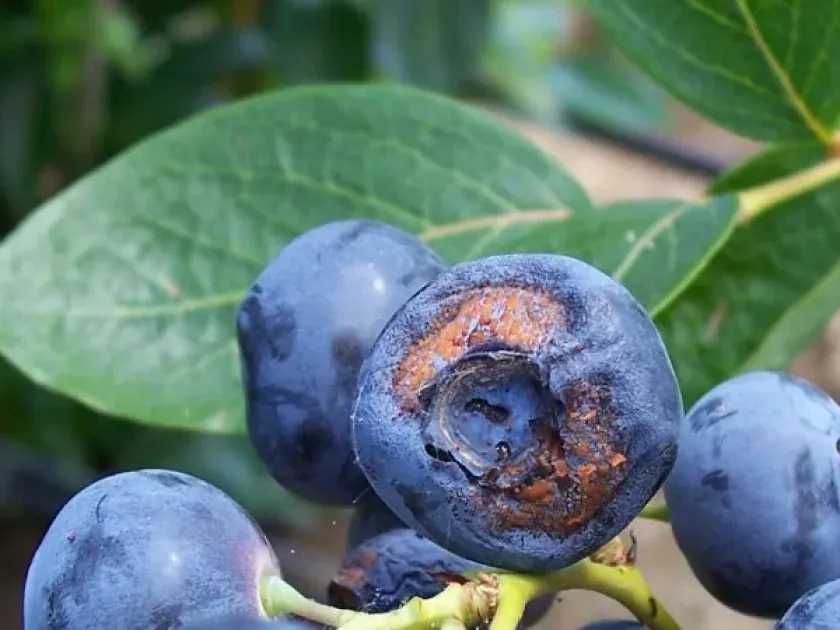
Initial signs of infection appear as small, water-soaked, or chlorotic spots on the surface of leaves or fruit. These spots gradually darken, becoming brown or black, and often develop a sunken appearance.
Concentric rings frequently form within the lesion as the fungus spreads. In humid conditions, the centers of these lesions become covered in characteristic orange to salmon-pink masses of spores, which are easily spread by water.
Stem infections manifest as elongated dark lesions or cankers that can girdle the stem, leading to the collapse or death of the distal parts of the plant. Infected leaves often curl, turn yellow, and drop prematurely.
Fruit decay progresses rapidly from small spots to large, necrotic areas. In severe cases, the entire surface of the fruit may be covered in fungal structures, leading to total tissue collapse and internal rot.
It is important to note that many infections remain latent (asymptomatic) for extended periods. The transition to visible symptoms often coincides with the ripening process or physical injury to the plant tissue.
Control measures
Integrated management is essential for controlling this pathogen. Sanitation is the first line of defense; removing and destroying all infected plant parts and crop residues drastically reduces the primary inoculum source.
Cultural practices, such as maintaining proper plant spacing to improve air circulation and implementing irrigation methods that avoid wetting foliage, are crucial for keeping the plant environment dry and less conducive to infection.
Chemical control involving the timely application of fungicides is widely used. Copper-based products, strobilurins, and triazoles are effective when applied preventively during periods of high humidity and rainfall.
Good agricultural practices must include scouting for the earliest signs of disease and ensuring thorough coverage during spraying, as the fungus often persists in hard-to-reach areas like the interior of a canopy.
Finally, a rotating fungicide program is necessary to mitigate the risk of the pathogen developing resistance to specific active ingredients, ensuring long-term efficacy of the protection measures.
Causes diseases · 2
Discussion
No discussions yet — be the first.