

SKU #48680
·
63 views
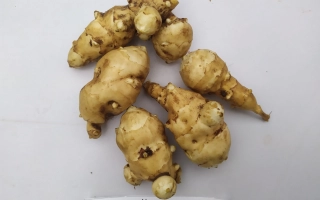
Purple Kyiv Topinambur
Jerusalem Artichoke
User rating
0 votes0% positive reviews
No ratings yet — be the first.
Rind Color
Purple, White, Yellow, Pink
Flavor Characteristics
Sweet, Soft, Juicy
Drought Resistance
High
Usage
Culinary, Feed Crop, Industrial Production, Medicine
About product

A drought-resistant, high-immunity variety with exceptional versatility for food and industrial use.
Rind Color
Purple, White, Yellow, Pink
Flavor Characteristics
Sweet, Soft, Juicy
Drought Resistance
High
Usage
Culinary, Feed Crop, Industrial Production, Medicine
Description
Field Performance and Operational Reliability
When selecting planting material, the 'Fiolet kievskiy' variety stands out as a robust asset developed by the M.M. Gryshko National Botanical Garden of the NAS of Ukraine. For a farm operator, this variety represents a low-maintenance, high-yield solution. Its primary technical advantage is its high drought resistance, which significantly simplifies irrigation management and de-risks production in arid zones.
Maintenance and Industrial Versatility
In terms of crop health, 'Fiolet kievskiy' displays excellent resistance to Alternaria and Sclerotinia, effectively reducing the need for intensive fungicide spraying. From an operational standpoint, this variety is highly versatile, fitting into diverse market segments:
- Food Industry: prized for its sweet, juicy, and soft profile.
- Livestock Sector: serves as a high-energy fodder crop.
- Industrial Processing: high inulin content makes it an excellent candidate for extraction and industrial use.
- Pharmacology: recognized for its medicinal properties in botanical research.
The tubers exhibit a diverse color palette, ranging from violet and pink to white and yellow. This aesthetic trait serves as a unique variety marker during sorting operations. This crop is a rational choice for modern farming: it requires minimal specialized intervention, integrates easily into existing crop rotation cycles, and delivers consistent results regardless of fluctuating climate conditions.
Crop & resistance
Disease resistance
Specifications
| Rind Color | |
|---|---|
| Flavor Characteristics | |
| Drought Resistance | |
| Usage | |
| Features | |
| Registration year | 2000 |
| Catalog | Catalog → Jerusalem Artichoke |
| Legal data |
Show · 1
|
| Country | Ukraine |
Store offers
Prices are updated on loadLoading offers…
Aggregator catalog: prices are collected automatically from store websites, normalized by AI and converted at the current exchange rate. Before ordering, confirm the price and availability on the store's website. This block is not indexed by search engines — the data is loaded after the page opens.
Not yet комментариев. Be the first!
Alternatives
Jerusalem Artichoke · similar varieties





See also
Often considered together with this variety






Recently viewed
Products you’ve viewed on this site
Reviews · 0