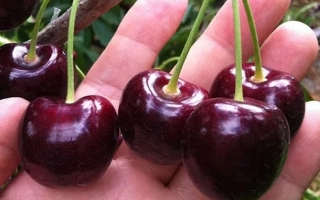
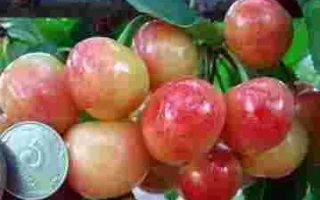
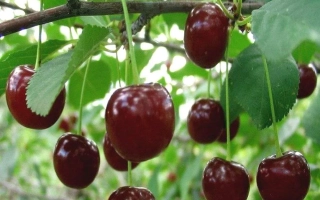
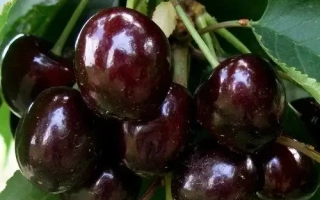
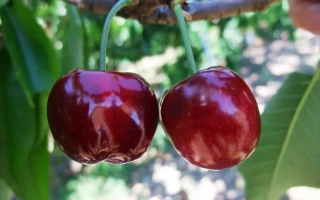
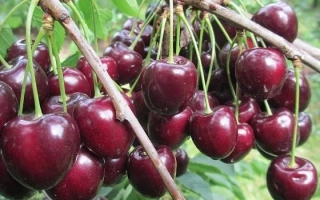
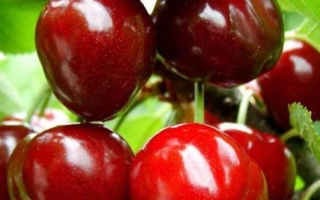
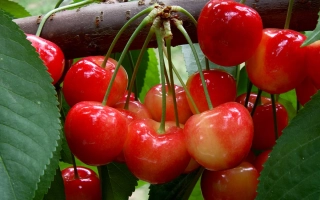
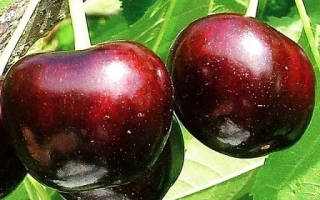
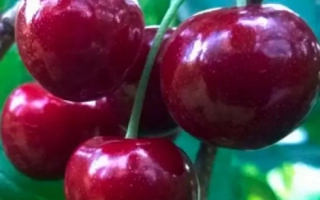
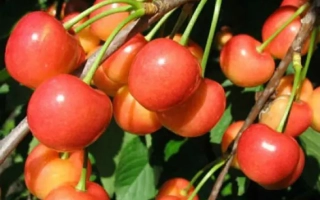
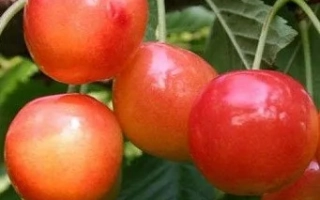
Cherry variety Kordia — a late-ripening variety developed in Czechia, distinguished by large, attractive, and tasty fruits. The berries are heart-shaped, dark red, almost black, with brown or pomegranate speckles, weighing 8–13 grams and having a diameter of about 28–30 mm. The fruit skin is dense and glossy, covered with light spots, the flesh is dark red, dense, juicy, and aromatic, with an excellent balanced flavor containing approximately 17° sugar by Brix. The fruits detach easily from the pit, do not crack during rain, are resistant to rot, and withstand transportation well, making this variety popular both for amateur cultivation and commercial production. Kordia trees are medium-sized with a spreading, spherical crown, reaching a height of 4–5 meters, with active growth observed in the first years after planting. Fruit production begins on the 3rd–4th year, with high yields — up to 20–50 kg of berries per tree. Harvesting is prolonged and lasts about 10 days, allowing for a longer enjoyment of fresh fruit. For successful pollination, it is recommended to plant pollinator varieties nearby, such as Summit, Van, Burlat, Regina, and others. Cherry Kordia requires preventive treatments against pests and diseases, as its resistance is moderate, and also protection of seedlings from frost in the first years of life. This variety is valued not only for its high commercial quality and yield but also for the beneficial properties of its berries. Cherries are rich in vitamins and minerals, especially iron and potassium, making them beneficial for anemia and hypertension. Berries are consumed fresh and used for making compotes and juices. The fruits retain their consumer quality when stored in a refrigerator for up to two weeks. The lifespan of the trees is approximately 20 years, allowing for long-term enjoyment of the harvest and stable income in commercial cultivation.