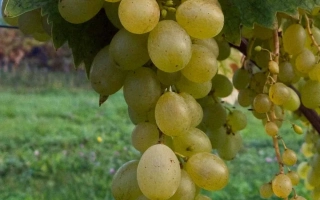
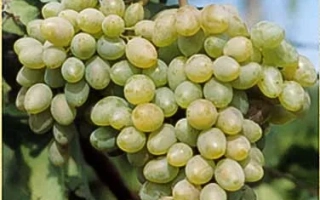
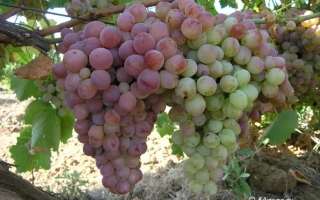
The Italy grape variety is a late-ripening table grape variety developed in Italy in 1911. The vines of this variety are vigorous, with dark green five-lobed leaves that have a whitish-golden hue in early stages, gradually transitioning into a deep green. The leaves are deeply lobed and wrinkled, and the shoots are a contrasting brown color. The grape clusters are large, cylindrical-conical in shape, often branched, weighing from 500 to 700 grams, with loosely arranged berries.
The berries of the Italy variety are oval, yellow-amber in color with a matte surface and a dense, tough skin. Beneath the skin lies a fleshy, juicy pulp with moderate sweetness and a slight acidity. The berries typically contain two to four large seeds. A distinctive feature of this variety is its original muscat aroma with citrus notes, which gives the grape high gastronomic qualities.
The variety is characterized by high yield and moderate resistance to diseases such as mildew and oidium. However, the grape has weak cold tolerance and requires warm climatic conditions, as it does not withstand prolonged frosts. The Italy grape is widely used for fresh consumption and is suitable for making compotes, jams, and marinades due to its flavor characteristics and firm skin.