


SKU #46120
·
75 views
Lesya
Grape
User rating
0 votes0% positive reviews
No ratings yet — be the first.
Usage Group
Dining
Ripening Period
Early, Medium
Cold Resistance
Average (up to -21°C)
Resistance to Mildew
Low
Store offers · 1 from 1 stores
Prices are updated on loadLoading offers…
Available at: Polisadnik
Aggregator catalog: prices are collected automatically from store websites, normalized by AI and converted at the current exchange rate. Before ordering, confirm the price and availability on the store's website. This block is not indexed by search engines — the data is loaded after the page opens.
About product

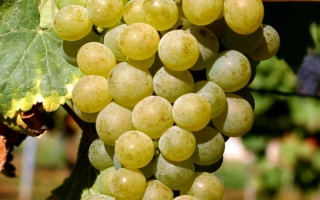
A high-yielding, large-berried table grape variety requiring intensive fungicide management.
Usage Group
Dining
Ripening Period
Early, Medium
Cold Resistance
Average (up to -21°C)
Resistance to Mildew
Low
Description
Technical Profile of the "Lesya" Grape Variety
Developed by the Tairov Institute of Viticulture and Enology, this table grape variety is engineered for consistent yields with a focus on high marketability. "Lesya" is a specialized solution for growers prepared to invest in intensive management, as its genetic profile requires rigorous phytosanitary monitoring.
Biological Traits and Productivity
The bush exhibits moderate vigor, facilitating canopy management and optimizing nutrient distribution. The bisexual flowers ensure stable pollination, minimizing the risk of uneven berry sizing ("shot berries"). High yield potential necessitates careful load management; overcropping can delay ripening and negatively impact brix levels.
- Cluster Parameters: Ranging from 500 to 800g with moderate density, allowing for optimal berry development.
- Berry Characteristics: The large size (5–8g) makes the variety a strong contender for fresh produce markets.
- Phenology: The variety shows a flexible ripening window (ranging from early to mid-season), allowing for adjustable harvest scheduling.
Agronomic Risks and Protection Management
The critical factor in managing this variety is its susceptibility to pathogens. Its low natural resistance to downy mildew, powdery mildew, and gray mold necessitates a stringent, proactive fungicide spray program. Preventive measures must be systematic, particularly during phases of active growth and berry development. With a moderate cold hardiness (down to -21°C), the variety is best suited for regions with milder winters or requires mandatory vine covering. "Lesya" represents a professional-grade selection, prioritizing fruit aesthetics in exchange for meticulous vineyard care.
Crop & resistance
Crop
Disease resistance
Specifications hover over for a hint about the specification
| Usage Group | |
|---|---|
|
Ripening Period
Ripening Period
It takes 70-100 days until pepper reaches flowering stage, 130-160 days until technical fruit ripeness, and 135-180 days until physiological ripeness. |
Early, Medium |
| Cold Resistance | |
| Resistance to Mildew | |
| Resistance to oidium | |
| Resistance to Gray Mold | |
|
Yield
Yield
Overall bulb harvest per unit area. Depends on both onion variety characteristics and agronomic practices, fertilizers, and irrigation. Under optimal growing conditions, an onion yield of 100 tons per hectare and above is not considered record-breaking. |
High |
| Bush Growth Power | |
| Flower Type | |
| Bunch Size | Large (500–800 g) |
| Berry Size | Large (5–8 g) |
| Berry Color | |
| Flavor | |
| Sugar Content | Average (16–20%) |
| Care Requirement | |
| Assignment | |
| Registration year | 1985 |
| Catalog | Catalog → Grape |
| Legal data |
Show · 1
|
| Country | Ukraine |
Not yet комментариев. Be the first!
Alternatives
Grapevine saplings · similar varieties

Saperavi
ФГБОУ ВО Омский государственный аграрный университет имени П.А. Столыпина
066 5 offers
3.77 €per seedling ≈ 195 ₴




See also
Often considered together with this variety




Recently viewed
Products you’ve viewed on this site
Reviews · 0