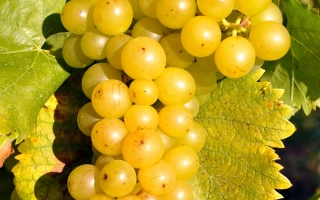
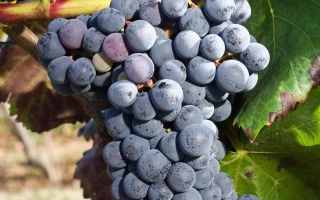
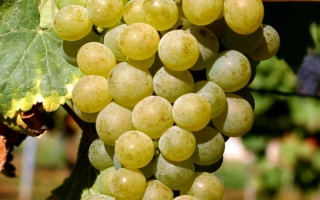
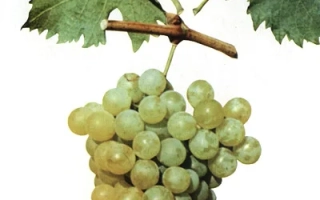
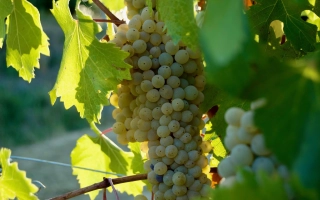
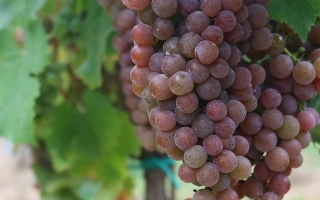
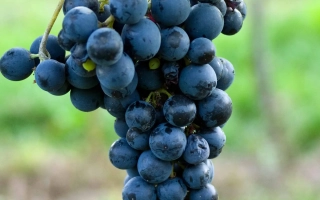
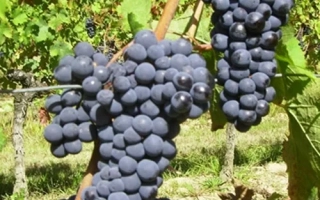
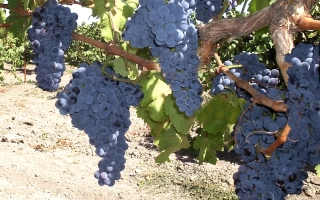
The Bastardo grape variety is a technical European variety widely distributed in Mediterranean countries, as well as in Moldova, Ukraine, and Central Asia. The bushes are characterized by medium growth vigor and medium shoot ripening. Leaves are of medium size, rounded, five-lobed with characteristic weak webby-hairy pubescence on the lower surface. Bunches are cylindrical-conical or conical in shape, medium-sized, varying in density, with a thin and long pedicel. Berries are small or medium-sized, oval, dark blue or black, covered with a thick waxy bloom (pruine), the pulp is juicy and sweet, without a pronounced aroma. The variety has medium maturity, the vegetation period is about 146 days with a sum of active temperatures of about 2881°C. Yield varies and averages 8-12 tons per hectare, corresponding to approximately 107 centners per hectare, with maximum indicators up to 182 centners. The percentage of fruit-bearing shoots is about 49%, and the number of bunches per shoot ranges from 0.6 to 1.3. The variety has medium resistance to fungal diseases such as downy mildew and powdery mildew, but is susceptible to gray rot. Frost resistance and tolerance to waterlogging in the variety are weak, which requires careful care and selection of suitable growing conditions. Bastardo is used mainly for the production of high-quality strong wines, including port-style wines, as well as semi-sweet and dry wines. Thanks to its technical characteristics and taste qualities, the variety is valued in winemaking. Moreover, berries can be consumed fresh. Variety features such as short internodes, leaf coloration in wine-red shades in autumn, and the presence of well-developed suckers make it recognizable and attractive for viticulturists seeking stable and quality harvests.