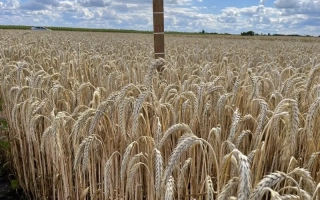
Winter wheat variety 'Raritet' was developed by the Institute of Plant Physiology named after V.Ya. Yuryev of NAAN and registered in 2008. This variety belongs to the lutescens type and is intended for cultivation in the forest-steppe and Polissia regions. Plants are medium-early, 110–130 cm tall, with strong stems resistant to lodging, ensuring reliability under adverse weather conditions. The variety's winter hardiness is above average and rated 7.5 points, enabling successful winter survival in the mentioned regions.
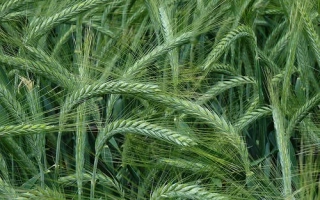
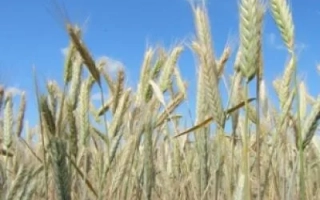
The spike of 'Raritet' is glabrous, white, awnless, and spindle-shaped, 9–12 cm long, dense, with osteoid serrated projections. The grain is red, oval-shaped, smooth, with a 1000-grain weight of 40–52 g. The vegetation period is 275–285 days. The variety exhibits high resistance to drought and diseases, enhancing its adaptability and yield stability.
The agronomic qualities of the variety include high baking and milling properties. The grain protein content is 13.5–14.9%, crude gluten content is 24–28%, and the gluten deformation index is 50 arbitrary units. The flour is yellow in color, with a semolina-like structure and high extraction rate (78–85%). The potential grain yield reaches 9–10 t/ha. Sowing is recommended from September 1 to 15 at a rate of 3–5 million germination seeds per hectare, especially following previously cropped fields, perennial grasses, or corn for silage.