


SKU #60858
·
25 views
S 961 F
Sugar Beet
SESVANDERHAVE NV/SAUser rating
0 votes0% positive reviews
No ratings yet — be the first.
Direction Type
Sugar-type (Z)
Ploidy Type
Triploid
Registration year
2014
About product

A high-performing sugar-type hybrid with strong disease resistance for reliable sugar yields.
Direction Type
Sugar-type (Z)
Ploidy Type
Triploid
Registration year
2014
Description
Consistent Yields and Reliable Quality
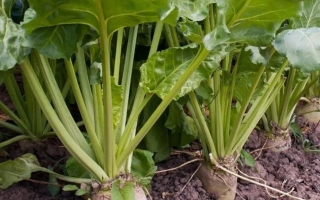
When managing sugar beet production, the primary goal for any agronomist is balancing root mass with high sugar content. The C 961 F hybrid from the Belgian breeder Sesvanderhave Nv/Sa is a dependable tool designed for those who prioritize stability over volatile experimental results.
Field Performance and Disease Resistance
The core advantage of C 961 F is its robust genetic resistance. Specifically bred to withstand rhizomania and cercospora, this hybrid provides an essential safety net in high-pressure environments. When other varieties begin to struggle under heavy disease pressure or excessive moisture, this triploid hybrid maintains a healthy canopy, allowing for optimal sugar accumulation until harvest.
Key Production Features
- Z-type (Sugar type): Focused on maximizing sugar content, making it highly desirable for processing facilities that enforce strict quality standards.
- Ease of Harvest: The uniformity of root development and consistent growth patterns simplify the operation of harvesting machinery. Less crop loss and efficient logistics are direct benefits of its stable morphology.
- Triploid Adaptability: The genetic structure provides excellent resilience to temperature fluctuations, ensuring consistent performance regardless of season-to-season weather variance.
From an operational standpoint, C 961 F does not require overly complex nutritional programs. It responds well to standard mineral application and maintenance, allowing for predictable budgeting and operational planning. For farms looking to minimize field risks while ensuring a solid return on investment, this hybrid represents a proven, high-performing solution that consistently delivers quality yield per hectare.
Crop & resistance
Crop
Disease resistance
Specifications
| Direction Type | |
|---|---|
| Ploidy Type | |
| Registration year | 2014 |
| Catalog | Catalog → Sugar Beet |
| Manufacturer | SESVANDERHAVE NV/SA |
| Legal data |
Show · 2
|
| Country | Belgium |
Store offers
Prices are updated on loadLoading offers…
Aggregator catalog: prices are collected automatically from store websites, normalized by AI and converted at the current exchange rate. Before ordering, confirm the price and availability on the store's website. This block is not indexed by search engines — the data is loaded after the page opens.
Not yet комментариев. Be the first!
Alternatives
Sugar beet seeds · similar varieties




See also
Often considered together with this variety




Recently viewed
Products you’ve viewed on this site
Reviews · 0