

SKU #63481
·
78 views
BERING
Soybean
User rating
0 votes0% positive reviews
No ratings yet — be the first.
Seeds: oil content
20-21%
Seeds: protein content
43-45%
Registration year
2024
About product

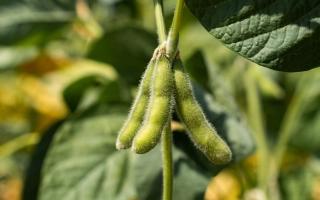
A high-protein, technologically versatile soybean variety with predictable yields.
Seeds: oil content
20-21%
Seeds: protein content
43-45%
Registration year
2024
Description
Operational Reliability in the Field
Working with the 'Bering' soybean variety demonstrates clear predictability and ease of management. Developed by the All-Russian Research Institute of Soybeans, this variety is tailored for producers who prioritize operational stability and consistent grain quality. Its response to standard agronomic practices allows for seamless integration into existing crop rotation systems without the need for complex, specialized equipment.
Biochemical Performance and Processing
The core strength of 'Bering' lies in its composition: a protein content of 43–45% and an oil content of 20–21%. For the operator, this translates into a high-value commodity that is easily marketable. During harvest, the uniformity of stand maturation allows for optimized combine settings, reducing fuel consumption and minimizing header losses associated with uneven crop maturity.
Practical Maintenance and Management
- Technological Plasticity: The variety adapts well to various soil types, simplifying the logistics of seed distribution across different farm fields.
- Harvest Efficiency: Consistent maturation allows for a smooth harvest window, which significantly reduces the pressure on harvesting machinery and personnel.
- Post-Harvest Handling: Excellent seed uniformity streamlines the cleaning and drying process at the storage site, reducing operational energy costs.
Choosing 'Bering' means investing in a variety that offers a balance between high-quality output and operational simplicity. It requires standard nutritional and protection protocols, delivering reliable results that minimize the risk of yield variability and maximize the efficiency of your field operations.
Crop & resistance
Crop
Specifications
| Seeds: oil content | 20-21% |
|---|---|
| Seeds: protein content | 43-45% |
| Registration year | 2024 |
| Catalog | Catalog → Soybean |
| Legal data |
Show · 1
|
| Country | Russia |
Store offers
Prices are updated on loadLoading offers…
Aggregator catalog: prices are collected automatically from store websites, normalized by AI and converted at the current exchange rate. Before ordering, confirm the price and availability on the store's website. This block is not indexed by search engines — the data is loaded after the page opens.
Not yet комментариев. Be the first!
Alternatives
Soybean seeds · similar varieties


See also
Often considered together with this variety




Recently viewed
Products you’ve viewed on this site
Reviews · 0