


SKU #46627
·
49 views
Botanical
Sorghum
User rating
0 votes0% positive reviews
No ratings yet — be the first.
Direction
Grain
Vegetation Period
80-90 days
Grain; Color
White, Red, Dark Brown
Grain; Protein Content
11-12%
About product

A tannin-free grain sorghum variety with high starch content for livestock feed and gluten-free food production.
Direction
Grain
Vegetation Period
80-90 days
Grain; Color
White, Red, Dark Brown
Grain; Protein Content
11-12%
Description
Botanichniy Sorghum: A Science-Backed Grain Innovation
Developed by the M.M. Gryshko National Botanical Garden of the NAS of Ukraine, the 'Botanichniy' variety represents a specialized approach to sorghum production. While many current hybrids focus on biomass, 'Botanichniy' is engineered specifically for grain output. Its standout feature is the complete absence of tannins, a critical quality factor that increases nutrient bioavailability for livestock and removes the need for costly processing techniques in feed formulation.
Technical Performance and Efficiency
With a short vegetation cycle of 80–90 days, 'Botanichniy' serves as an excellent drought-tolerant alternative to traditional cereals. The grain composition is notably robust, boasting a starch content of 70–80% and protein levels ranging from 11–12%. This makes it a high-energy concentrate for animal diets, effectively reducing reliance on corn in regions prone to water scarcity.
Market Versatility
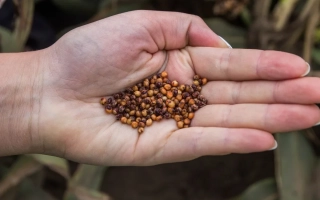
The variety displays a striking color range in its kernels—from pure white to deep red and dark brown. This diversity makes it not only a premier choice for the feed market but also a high-potential crop for the food industry, particularly in the growing segment of gluten-free grains and flour. The absence of tannins ensures a neutral, pleasant taste profile, which is essential for consumer-grade products.
- Strengths: High adaptability, tannin-free composition, superior starch energy, multi-industry application.
- Challenges: Precise harvest management is required to prevent field loss.
- Best for: Livestock producers aiming for high-efficiency rations and food processors looking for high-quality, gluten-free raw materials.
Crop & resistance
Crop
Specifications hover over for a hint about the specification
|
Direction
Direction
Existing varieties and types of cabbage are grown for fresh consumption, long-term storage, and technical processing. |
|
|---|---|
| Vegetation Period | 80-90 days |
| Grain; Color | |
| Grain; Protein Content | 11-12% |
| Grain; Starch Content | 70-80% |
| Grain; Tannin Content | |
| Registration year | 2024 |
| Catalog | Catalog → Sorghum |
| Legal data |
Show · 1
|
| Country | Ukraine |
Store offers
Prices are updated on loadLoading offers…
Aggregator catalog: prices are collected automatically from store websites, normalized by AI and converted at the current exchange rate. Before ordering, confirm the price and availability on the store's website. This block is not indexed by search engines — the data is loaded after the page opens.
Not yet комментариев. Be the first!
Alternatives
Sorghum seeds · similar varieties


See also
Often considered together with this variety





Recently viewed
Products you’ve viewed on this site
Reviews · 0