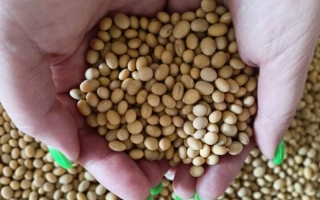
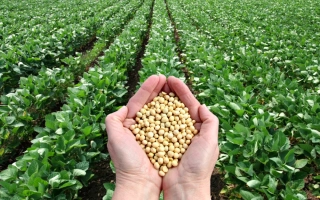
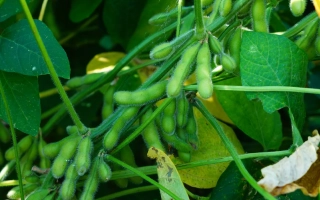
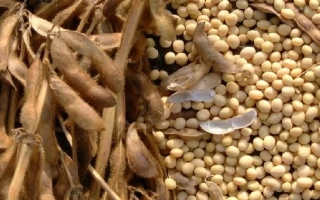
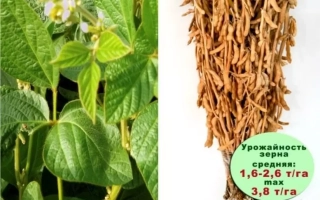
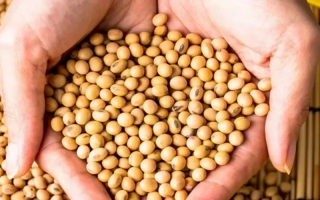
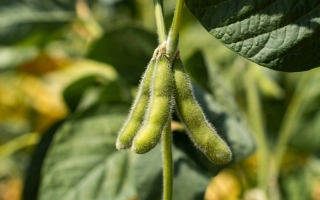
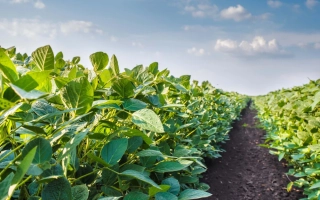
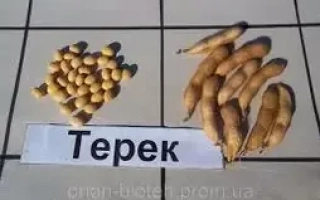
Cassidi soybean variety is a mid-season crop with a vegetative period of 110-120 days, recommended for cultivation in the Central Black Earth, North Caucasian, and Far Eastern regions, including the Voronezh region. The plant has a determinate growth type, medium height of about 70 cm, with an upright stem and reddish-brown pubescence. The lower pod is attached at a height of approximately 12.5-12.9 cm. Flowers are purple, seeds are light brown, elongated-flattened with a yellow hilum, and the mass of 1000 seeds is 177.5 g.
The variety is characterized by high initial growth energy and resistance to various diseases and unfavorable factors. It has high resistance to lodging and shattering (8 points each), as well as cracking (7 points). In addition, Cassidi is distinguished by a high degree of resistance to bacterial spot, perinosporosis, ascohitosis, fusarium, and septosporiosis, each rated at 9 points. Seed maturation occurs when 95% of the pods are brown in maturity, after which seed moisture drops to less than 15% within 5-10 days.
The protein content in Cassidi seeds is 34.2%, and fat content is 23.8%, making it attractive for use in the food and feed industries. Average yield in the Central Black Earth region reaches 20.5 centners/ha, with maximum yield figures recorded at 45.6 centners/ha. Thanks to its agronomic characteristics and adaptability to various soil and climatic conditions, this variety is a reliable choice for farmers seeking a stable and quality soybean harvest.