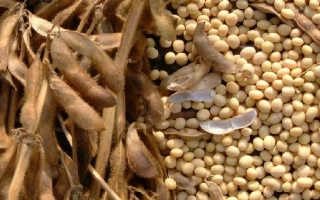
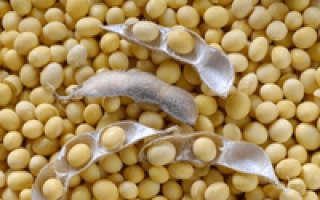
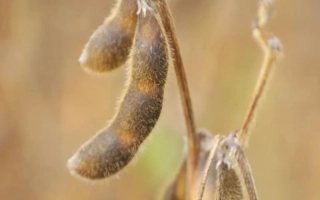
Soybean variety "Emerald" is a medium-maturing plant with a vegetation period of 115-125 days, developed by the Kirovograd State Agricultural Experimental Station of NAAN and registered in the Register of Plant Varieties of Ukraine since 1995. This variety is characterized by high yield — 3.0-3.2 t/ha, plasticity, and resistance to drought, lodging, and shattering. Plants are indeterminate in growth type, tall (120-140 cm), with intense reddish pubescence on stems and pods, white flowers, and yellow seed coats without pigmentation. Plant habit is semi-spreading, with moderate leafiness and broadly ovate leaves. The 1000-seed mass is 140-160 g, and each flowering node forms 2-3 well-developed pods. Soybean "Emerald" is suitable for cultivation as seed, for feed, and for food purposes. Due to its high crude protein content (40-42%) and fat content (20-22%), this variety's grain is a valuable raw material for the food industry and soybean oil production. Additionally, soy is widely used in animal feeding, as it rapidly accumulates green mass, which serves as high-quality feed. Soy is also widely used across various regions of Ukraine, indicating its adaptability and versatility. Besides traditional uses, soybean "Emerald" can be used for growing microgreens — young plants with two true leaves, which contain several times more nutrients than mature plants. Soy sprouts are rich in amino acids, including essential ones for the human body, and possess beneficial properties: they normalize metabolism, reduce blood cholesterol levels, help prevent cardiovascular diseases, and support liver function. Thus, this soybean variety represents a universal product combining high yield, nutritional value, and broad application potential.