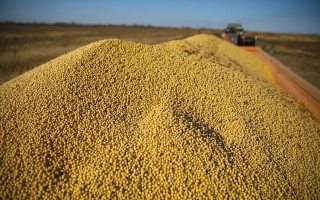
GRITIKAZ 80 is a medium-early soybean (Glycine max (L.) Merr.) variety developed by the Khabarovsk breeding program at the Far Eastern Institute of Agricultural Science. The vegetative period lasts approximately 111-113 days, ensuring timely crop maturity. Plants feature low or medium growth, determinate or semideterminate type, with a height of about 68 cm and lower pods attached at a height of roughly 15.7 cm. Stems and pubescence are reddish-brown, flowers are purple, and seeds are spheroid-flattened, green-yellow with a dark hilum. The variety boasts high yield, ranging from 15.9 to 20.9 c/ha across various regions, with maximum indicators reaching up to 30.3 c/ha, confirming its adaptability and stability. The mass of 1000 seeds varies from 157 to 195.4 g. GRITIKAZ 80 is characterized by high protein content — from 37.7% to 40.3% — and fat content — about 19-20% — making it valuable for the food industry and production of functional products. The plant is resistant to lodging and possesses good resistance to diseases such as ascochitosis and septoria, and is weakly damaged by codling moths. Due to its agronomic and technological characteristics, the GRITIKAZ 80 variety is widely used for cultivation in the Far Eastern region and other zones with similar climatic conditions. It is suitable for producing high-quality food products, ensuring a stable and high seed yield with excellent nutritional properties. Resistance to diseases and adaptability to growing conditions make this variety a reliable choice for farmers aiming to obtain a high-quality soybean crop.