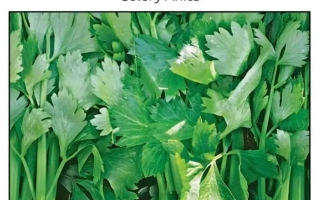
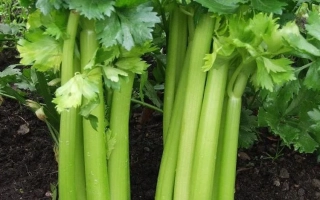
Root celery variety Merga, developed by the Dutch company Rijk Zwaan, is a high-yielding and adaptable variety with a medium maturation period — the vegetative period is 130–140 days. The plant forms upright dark-green leaves with a small attachment area, and the roots are round, smooth, and weigh between 800 to 1000 grams. The root flesh is dense, white, juicy, tender, and free of cavities, making it attractive for fresh consumption and culinary use. Thanks to its good market appearance and excellent transportability, Merga celery is suitable for both fresh markets and long-term storage — under proper conditions, the roots retain their flavor for up to 6–7 months.
The variety exhibits high resistance to diseases such as septoria and viral mosaic, as well as to bolting, ensuring a stable yield even under stressful growing conditions, including hot summers and temperature fluctuations. The plant adapts easily to various conditions and is suitable for both manual and mechanical harvesting, simplifying the harvest process and reducing product loss.
For successful cultivation of Merga celery, seeds should be sown directly into open ground at the beginning of May under favorable weather conditions, with a planting density of 70–85 thousand plants per hectare. The soil should be loose and fertile, with the addition of well-rotted compost or other organic fertilizers, avoiding fresh manure. Regular and abundant watering is essential, as celery is a moisture-loving crop; water deficiency may cause root cracking and deterioration of flavor. During the season, several feedings are recommended, the first being nitrophoska, followed by potassium and phosphorus fertilizers without nitrogen. The harvest should be carefully collected to avoid damaging the roots, ensuring their long-term storage under cool, constant temperature and humidity conditions.