


SKU #74492
·
56 views
Olana
Sea Buckthorn
User rating
0 votes0% positive reviews
No ratings yet — be the first.
Decorative Plants
Sea Buckthorn
Registration year
2023
About product

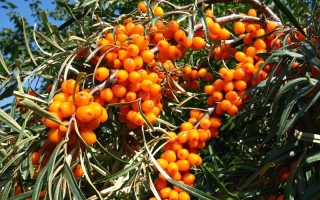
A resilient sea buckthorn variety with natural immunity to wilt diseases for professional orchards.
Decorative Plants
Sea Buckthorn
Registration year
2023
Description
Resilient Sea Buckthorn: Managing Vascular Diseases
The «Olyana» sea buckthorn variety is a product of comprehensive breeding by the Institute of Horticulture of the UAAS and the National Scientific Center «Institute of Agriculture of the National Academy of Agrarian Sciences of Ukraine». This variety stands out due to its genetic resistance to vascular diseases that often devastate commercial orchards: verticillium wilt and fusarium wilt. For professional growers, choosing Olyana is a risk-mitigation strategy that significantly reduces reliance on fungicides.
Operational Benefits for Growers
Olyana is designed for stable performance within diverse Ukrainian soil and climate conditions. The collaboration of lead researchers (Dydychenko O. A., Yatsyshen O. L., Karazhbei P. P., and Taranenko L. K.) resulted in a cultivar that balances robust health with practical agricultural management.
- Reduced Mortality Rates: Superior resistance to wilt diseases ensures higher survival rates during the critical establishment phase of the plantation.
- Integrated Value: Beyond industrial berry production, Olyana serves as a decorative asset, making it versatile for both large-scale farming and boutique landscaping.
- Efficient Resource Allocation: By eliminating the constant threat of fusarium from the management protocol, producers can focus their labor and capital on irrigation, soil nutrition, and efficient harvesting cycles.
Olyana is an ideal candidate for farms prioritizing sustainable, low-chemical-input agricultural practices. The variety offers consistent results, provided standard site-specific agronomic practices are followed. It is a reliable choice for those looking to build a resilient, productive orchard with long-term viability.
Crop & resistance
Crop
Disease resistance
Specifications
| Decorative Plants | |
|---|---|
| Registration year | 2023 |
| Catalog | Catalog → Sea Buckthorn |
| Legal data |
Show · 5
|
| Country | Ukraine |
Store offers
Prices are updated on loadLoading offers…
Aggregator catalog: prices are collected automatically from store websites, normalized by AI and converted at the current exchange rate. Before ordering, confirm the price and availability on the store's website. This block is not indexed by search engines — the data is loaded after the page opens.
Not yet комментариев. Be the first!
Alternatives
Sea buckthorn saplings · similar varieties




See also
Often considered together with this variety


Recently viewed
Products you’ve viewed on this site
Reviews · 0