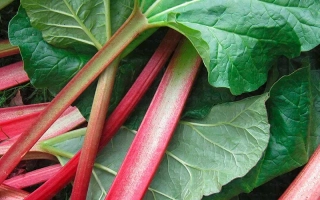
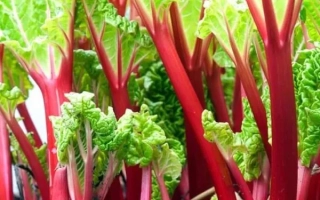
Rhubarb «Garden» – a perennial plant of the buckwheat family, distinguished by early maturation and high yield: 4 to 8.9 kg of petioles per square meter. The culture did not bloom, so it is grown exclusively in open beds or greenhouses in northern regions, where gardeners successfully harvest thanks to its cold resistance.
Rhubarb petioles are rich in vitamins, organic acids, pectin, and microelements. Due to the early start of the vegetation period, they become a valuable source of nutrients in the off-season when other crops have not yet started to grow. Rhubarb easily withstands frost, begins active growth at a temperature of +5 °C, and can grow for up to 10 years, although the best yields are achieved by plants 3–7 years old.
The culture requires minimal care: after planting, it is sufficient to ensure proper agrotechnology – fertilization, watering, and protection from strong winds. The harvest is collected over two to three months, and plants can be divided and renewed as they age. Rhubarb does not require extensive chemical treatment, rarely gets sick, and is almost not affected by pests, which makes it an ideal choice for organic farming, garden plots, and school gardens, sanatoriums, and catering institutions.
Petioles of «Garden» rhubarb are suitable both fresh and canned: jam, jellies, candied fruits, alcoholic and non-alcoholic beverages, pies, sauces. Thanks to their rich flavor and nutritional value, they become a popular ingredient in cuisine, and the decorative bush with large leaves and strong petioles adds aesthetic appeal to a garden or flower bed.