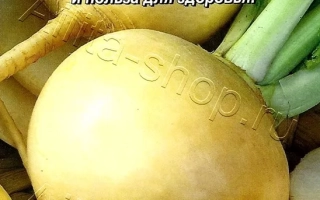
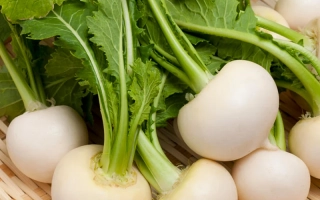
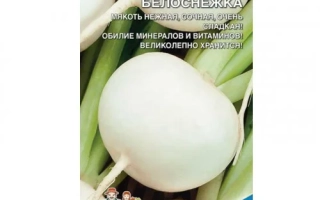
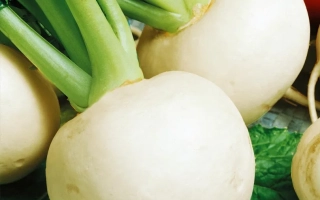
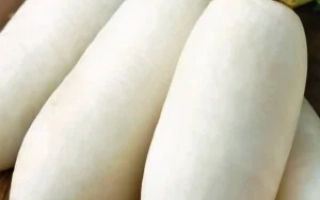
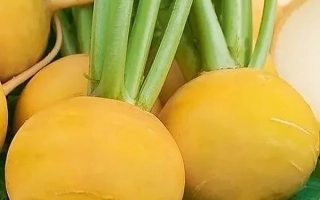
The Granddaughter radish variety is an early-maturing and quick-growing vegetable, ripening within 45-50 days from germination to technical maturity. The root crops have an inverted egg shape, weighing from 150 to 330 grams, with a light purple, tender, and smooth skin, as well as dense, white, very juicy, and sweet flesh with excellent taste qualities. This variety is suitable for fresh consumption, such as in salads, as well as for storage during the autumn-winter period, making it universal and convenient for various applications.
For successful cultivation of the Granddaughter radish, it is recommended to choose sunny areas with fertile, loose soil of neutral acidity, preferably loamy or loamy sands. Sowing is carried out early in spring for summer consumption or in mid-July for autumn-winter harvest, burying the seeds 1-2 cm deep. After the appearance of one or two true leaves, seedlings are thinned out, leaving a distance of about 8-10 cm between plants and 20-25 cm between rows. An important element of care are regular watering, loosening, and weeding to prevent crust formation, as well as fertilizing with nitrogen fertilizers two weeks after the appearance of seedlings and phosphorus-potassium compounds later.
The Granddaughter variety is distinguished by good yield – 3.5-5 kg per square meter. It is resistant to some pests, but may be attacked by cruciferous flea beetles and cabbage flies, for the prevention of which dusting with ash or tobacco powder is applied, and, if necessary, insecticidal treatments. The radish is rich in vitamins of the B, A, C groups, as well as minerals calcium, magnesium, potassium, and phosphorus, contains antioxidants and is a low-calorie product, which contributes to maintaining immunity and bone health.