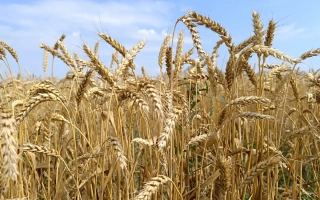
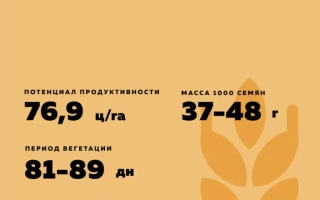
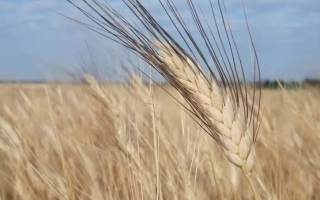
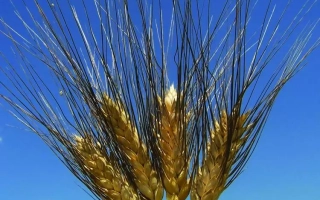
Yadrica is a variety of hard spring wheat (Triticum durum Desf.) intended for cultivation in the North Caucasus region, specifically in Krasnodar Krai. It is a mid-season variety with a vegetative period of 76 to 89 days, maturing simultaneously with the Yasenka variety. The plants have medium height, semi-upright stems, and medium-developed straw with a strong waxy coating on the neck, flag leaf blade, and spike. The spike is cylindrical, short, and of medium density, with white awns that are longer than the spike. The grain is semi-elongated, white, with a medium-length awn; the weight of 1000 grains ranges from 34 to 47 grams. The Yadrica variety is distinguished by high yield and resistance to adverse conditions. Average yield in the North Caucasus region is about 14.6 c/ha, reaching 22.7 c/ha in the Northern zone of Krasnodar Krai, with maximum indicators up to 45.8 c/ha. The plants are resistant to lodging, shattering, and drought, making them reliable for cultivation in the region. Additionally, the variety has high resistance to diseases, including powdery and hard bunt, yellow and brown rust, septoria, leaf spot diseases, and viral infections. Average resistance is noted for wheat head blight. The primary purpose of the Yadrica variety is to obtain high-quality grain for the production of pasta and cereal products. Pasta qualities of the grain are assessed as good and high, confirming its value for the food industry. Bushiness and density of the agrophytocenosis are medium, and spike productivity is also at a medium level, ensuring stable and high-quality grain. Thanks to its agronomic characteristics and resistance to stress factors, the Yadrica variety is a promising choice for farmers focused on producing hard wheat varieties with high quality and yield.