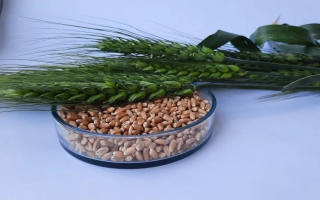
Spasivka is a wheat variety developed by Ukrainian selection, intended for cultivation in various climatic zones of Ukraine, including the Polissian, forest-steppe, and steppe regions. This variety belongs to the high-yield, short-stemmed, and mid-early maturing types, with a vegetation period of approximately 278–280 days. It is distinguished by high winter hardiness and drought resistance, making it a reliable choice for regions with variable weather conditions. Spasivka exhibits resistance to lodging, powdery mildew, brown leaf rust, as well as to kernel shattering and premature germination in the ear.
The grain of the Spasivka variety is characterized by high protein content — from 13.5% to 14.5% — as well as significant levels of crude gluten ranging from 29.7% to 34.3%. The flour strength is 330–370 AU, ensuring bread volume from 100 g of flour in the range of 1050–1150 ml. The yield potential reaches 70–85 c/ha, and in exceptional cases — up to 104.3 c/ha. The variety is versatile in terms of usage and suitable for various agronomic conditions, but requires adherence to sowing norms (5.0–6.0 million germinating seeds per hectare), protection against pests and diseases, as well as the application of the third fertilizer application to achieve maximum productivity.
Spasivka seeds undergo modern pre-sowing preparation, including ultraviolet and ozone treatment. This technology allows to increase seed germination and energy of germination by up to 20% compared to baseline indicators, and to eliminate up to 97% of harmful microflora, pests, and disease-causing agents. This ensures high quality sowing material and contributes to stable high yields.