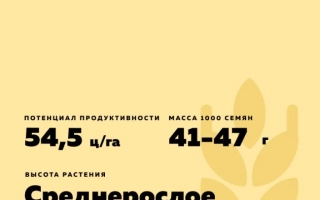
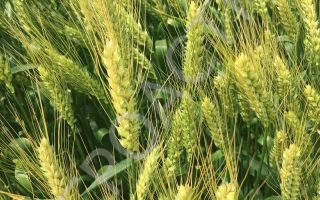
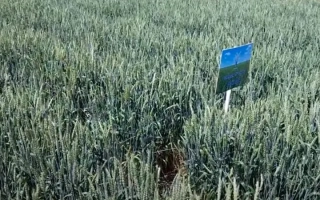
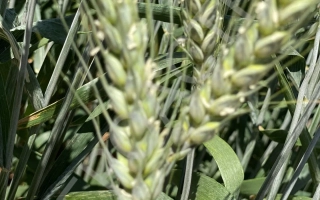
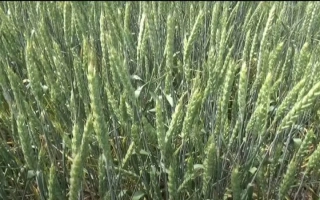
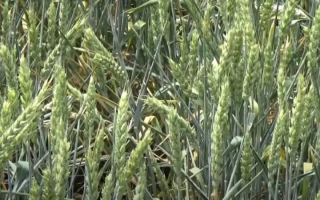
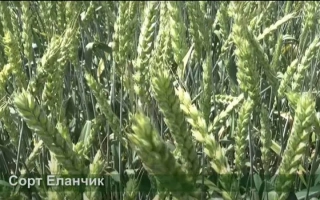
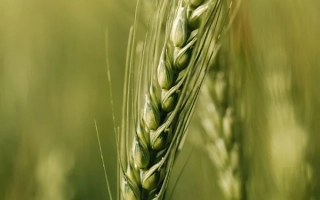
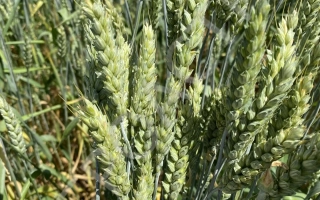
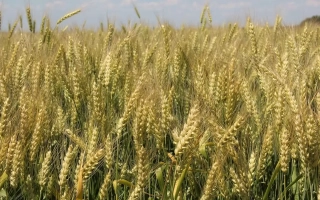
AGROFAK 100 is a variety of soft winter wheat (Triticum aestivum L.) developed for high yields of quality grain. The plants are semi-dwarf, of medium height, approximately 68-82 cm, with short stems and lodging resistance. The ear is cylindrical, white, of medium length and density, with short awned appendages. The kernel is colored, and the plant is characterized by weak to medium waxy bloom on the ear and straw. The bush is intermediate, with an ear shoulder of medium width and a straight or slightly curved tooth of the lower glume. The variety is distinguished by high yields: average figures in the Central-Black-Earth region reach 56.9 centners/hectare, in the North Caucasus — 54.9 centners/hectare, and the maximum yield under certain conditions exceeded 109 centners/hectare. AGROFAK 100 possesses excellent baking and milling qualities, which makes it in demand for the production of high-quality flour and bread. It is recommended for cultivation after fallow with a sowing rate of 4-5 million viable seeds per hectare. The variety is resistant to major diseases such as brown and yellow rust, powdery mildew, and moderately resistant to septoria. However, it is susceptible to common bunt and fusarium of the ear. In addition, AGROFAK 100 has high frost resistance and drought resistance, which allows for successful cultivation in various climatic conditions. Seeds of the variety are distinguished by high germination and quality, which ensures a stable and high yield for farmers.