


SKU #4261
·
265 views
Renklof Tennykovskiy
Plum
User rating
0 votes0% positive reviews
No ratings yet — be the first.
Type of Sort
Home Drain
Store offers · 2 from 2 stores
Prices are updated on loadLoading offers…
Available at: Garshinka · Sadokshop · Zakaz Semena
Aggregator catalog: prices are collected automatically from store websites, normalized by AI and converted at the current exchange rate. Before ordering, confirm the price and availability on the store's website. This block is not indexed by search engines — the data is loaded after the page opens.
About product

This variety was obtained by L.A. Sevastyanova at the Tatar Research Institute of Horticulture from hybridization of Tatar Yellow with Jefferson and elite 4-12 (Tern local Renklof reform). It has been registered in Tatarstan since 1988. The tree is low-growing with a medium-dense, spherical crown. The crown is moderately leafy. The bark on the trunk is brown with a grayish coating, rough. The ske…
Type of Sort
Home Drain
Description
This variety was obtained by L.A. Sevastyanova at the Tatar Research Institute of Horticulture from hybridization of Tatar Yellow with Jefferson and elite 4-12 (Tern local Renklof reform). It has been registered in Tatarstan since 1988.
The tree is low-growing with a medium-dense, spherical crown. The crown is moderately leafy. The bark on the trunk is brown with a grayish coating, rough. The skeletal branches are light brown, smooth. The shoots are reddish-brown, straight, medium-length, thin, bare, with small light-gray lenticels of medium density. The leaves are green, medium-sized, oval, occasionally broadly oval, slightly wrinkled, convex, slightly hairy, with blunt-toothed, occasionally doubly blunt-toothed, raised edges, a pointed, slightly downwardly curved apex, a broad-angled base, on short, thin pigmented petioles with lanceolate, medium-sized, early falling stipules. Stipules are small, sparse, yellow, round, located both on the petioles and at the base of the leaf. Flowers are white, medium-sized, with medium-open petals. The stigma is round, located both above and below the anthers.
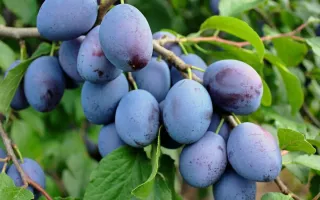
Fruits are small (18 g), round, unequal-sided, purple-dark red, with a rounded apex, small depression at the base, medium waxy coating, ventral suture. Skin is thin, bitter, easily removed. Flesh is yellow, fine-grained-fibrous, medium juiciness and density, slightly sour-sweet, good taste. Pedicel is medium length, thin. Detachment is dry. Stone is round-egg-shaped, medium-sized, light brown, with a narrowly round apex, bluntly pointed base, closed dorsal suture, narrow ventral suture, short blunt hilum, finely pitted-surfaced, moderately separates from the flesh.
Fruits ripen at the end of August to the beginning of September, have an attractive appearance, contain 14.6% dry matter, 1.7% organic acids, 12.88% sugars, 14.45 mg/100g ascorbic acid, suitable for fresh and processed consumption (jam, preserves).
Flowering begins in the second decade of May. It enters fruiting on the 3-4th year after budding.
This variety is medium-yielding, self-fertile, medium-winter-hardy, drought-sensitive, medium-heat-tolerant, moderately affected by clasterosporiosis, rust, and slime scale, well propagated by budding, spring grafting, medium-green cuttings in artificial mist. Pollinated by Sineglazka, Tatar Yellow, Red Early.
Advantages of the variety: early fruiting, self-fertility, suitability for fresh and processed consumption, attractive fruit appearance, low growth.
Disadvantages of the variety: low drought resistance, irregular fruiting due to flower bud freezing.
Crop & resistance
Crop
Specifications
| Type of Sort | |
|---|---|
| Catalog | Catalog → Plum |
Not yet комментариев. Be the first!
Alternatives
Plum saplings · similar varieties



See also
Often considered together with this variety


Recently viewed
Products you’ve viewed on this site
Reviews · 0