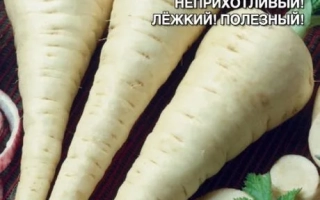
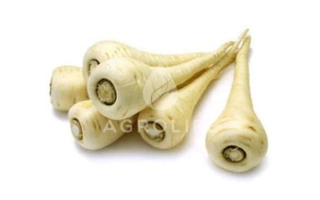
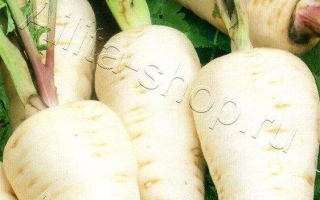
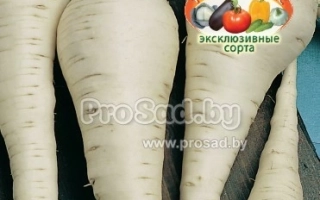
Parsnip "Student" is a biennial root crop with white smooth skin and a conical shape, ranging from 24 to 38 cm in length and 6–8 cm in diameter, with a fruit mass typically between 100 and 325 g. The flesh is light, juicy, with a distinct aroma and a spicy-sweet taste reminiscent of a blend of parsley and celery. It contains 16‑20 % dry matter, 3.5–8.4 % sugars, and 19.9–29 mg of vitamin C per 100 g of product, making it a valuable source of micronutrients and antioxidants.
This variety boasts high yields – up to 3‑4 kg/m² with proper care. Parsnip "Student" is resistant to diseases and drought, grows easily in open ground with sowing in April at a 25×40 cm pattern and a depth of 2–3 cm. The plants require regular weeding and watering but are not demanding regarding soil: they grow well alongside cucumbers, onions, cabbage, and potatoes as predecessors in the bed.
Parsnip is excellent for home cooking and canning. In fresh form, it is used in salads, soups, and meat dishes, while during long-term storage, the roots can be covered with wet sand to maintain their juiciness. Due to its low starch content compared to potatoes, parsnip is also a beneficial alternative for those monitoring carbohydrate intake in their diet.