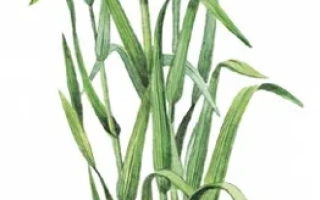
Rosita Pigeon Wheat (Echinochloa frumentacea Link) is a grain forage crop characterized by a medium height ranging from 73 to 200 cm and upright bushes with 1‑9 stems. The leafy foliage has an elongated-lanceolate shape without fuzziness, while the panicle represents a dense conical-obovoid structure, often drooping, without a neck or with a very short one.
The 'ROSITA' Pigeon Wheat is distinguished by good drought resistance and a medium vegetation period: from germination to the first cut – 60‑73 days, until maturity – 101‑110 days. The mass of 1000 grains fluctuates between 3.5 and 4.5 g, indicating high seed density. The grain contains approximately 13.8% protein and 6.3% fat, making it a valuable feed product.
Dry matter yield reaches 216 cts/ga, and seed yield is 28.9 cts/ga. These figures make the variety suitable for cultivation in a wide range of climatic zones: from the Northern and Central Black Earth regions to the Urals and the Far East. The variety is included in the State Register of Russia, confirming its official registration and compliance with quality requirements.