


SKU #72988
·
68 views
Yuzhny
Oleaster
User rating
0 votes0% positive reviews
No ratings yet — be the first.
Plant Type
Shrub, Low Tree
Fruit Assignment
Fresh market, Processing
Registration year
2009
Store offers · 1 from 1 stores
Prices are updated on loadLoading offers…
Available at: Kvityexotic
Aggregator catalog: prices are collected automatically from store websites, normalized by AI and converted at the current exchange rate. Before ordering, confirm the price and availability on the store's website. This block is not indexed by search engines — the data is loaded after the page opens.
About product

An adaptive, multi-purpose variety from the Vavilov Institute, ideal for both fresh consumption and traditional preserves.
Plant Type
Shrub, Low Tree
Fruit Assignment
Fresh market, Processing
Registration year
2009
Description
A Legacy of Vavilov Institute Breeding
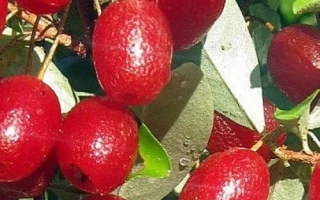
The 'Yuzhny' (Yuzhny) variety of silverberry (Elaeagnus) is a product of extensive breeding programs conducted by the N.I. Vavilov All-Russian Institute of Plant Genetic Resources. Developed as a resilient and adaptive cultivar, it serves as a staple for growers who prioritize reliable productivity and ease of management. The variety is widely recognized for its consistent performance and historical significance in regional horticulture.
Growth Habit and Morphology
This variety exhibits versatile structural characteristics, capable of developing as either a dense shrub or a small, manageable tree. This morphological flexibility is highly valued by growers as it facilitates routine maintenance, structural pruning, and harvesting. Its robust nature makes it a reliable candidate for various soil types and moderate climates.
Utility and Market Application
- Fresh Market: The fruits of the 'Yuzhny' variety are prized for their unique flavor profile, appealing to consumers seeking natural, nutrient-dense products.
- Processing: With a firm texture and stable chemical composition, this variety is highly suitable for processing. It is widely used for producing jams, compotes, and preserves that retain their integrity and flavor after processing.
The reputation of 'Yuzhny' is deeply rooted in the expertise of its originator, the Vavilov Institute. By focusing on genetic diversity and stress resistance, the institute has provided a cultivar that excels in both small-scale gardens and commercial production. Choosing this variety means opting for a time-tested, proven agricultural solution.
Crop & resistance
Crop
Specifications
| Plant Type | |
|---|---|
| Fruit Assignment | |
| Registration year | 2009 |
| Catalog | Catalog → Oleaster |
| Legal data | |
| Country | Russia |
Not yet комментариев. Be the first!



See also
Often considered together with this variety




Recently viewed
Products you’ve viewed on this site
Reviews · 0