


SKU #72987
·
75 views
Oleaster SHIKOTAN
Oleaster
Prices in stores
No offers yet — stores have not added prices for this product yet.
Similar varieties with prices
All offers: Oleaster
Plant Type
Low Tree
Plant Height
1.5-2 m
Yield (kg per plant)
12-18 kg
Fruit Size
Medium (1.5-2 g)
Your mark
0 votes
0% positive ratings
Description
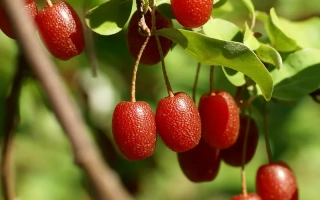
Shikotan is a modern variety of loquat (multiflora quince), formerly known as Tsuna or Tsunai, distinguished by large berries weighing from 1.7 to 2.1 grams and a bright red barrel-like appearance. The berries have dense flesh, a sweet taste with slight astringent notes; at full ripeness they resemble persimmons, while in unripe berries a slight bitterness is noticeable. Inside each berry is an elongated seed, and on the bush the fruits hang on thin long pedicels, which facilitates harvesting compared to sea buckthorn.
The Shikotan bush has a shrub-like form up to 1.5–2 m high and about 2 m in diameter. Leaves are dense, bright green with a silvery-metallic sheen on the underside. The root system is superficial, no deeper than 50 cm, like sea buckthorn. The plant begins fruiting in 4–5 years and fruits annually for a month, starting from late June. Yield from an adult bush is approximately 10–15 kg of berries. Frost resistance of the plant is high – up to -30 °C; however, covering the bushes is recommended for the first three years until the shoots become more resilient.
Shikotan is valued not only for its taste and yield but also for its beneficial properties. Leaves contain twice as much vitamin C as blackcurrant, and berries are rich in 17 amino acids important for human health. Decoction from leaves is used for colds, and berries for gastrointestinal disorders, improving circulation and possessing tonic and anti-inflammatory action. Japanese consider it a berry of longevity and youth, and it suits children as a vitamin supplement.
For optimal yield, it is recommended to plant 2–3 bushes in pairs to improve pollination. Shikotan is resistant to most diseases, but may show some fungal infections. Thanks to its decorativeness – beautiful fragrant flowers in spring and summer – it is also suitable for garden landscaping.
Crop & resistance
Crop
Specifications
| Plant Type | |
|---|---|
| Plant Height | 1.5-2 m |
| Yield (kg per plant) | 12-18 kg |
| Fruit Size | Medium (1.5-2 g) |
| Taste of Fruits | |
| Fruit use | |
| Registration year | 2009 |
| Catalog | Catalog → Oleaster |
| Legal data |
Show · 6
|
| Country | Russia |
No reviews yet. Be the first to share your experience.


See also
Often considered together with this variety





Recently viewed
Products you’ve viewed on this site
Reviews