


SKU #65014
·
59 views
BAGET
Oats
User rating
0 votes0% positive reviews
No ratings yet — be the first.
Ripeness Group (days)
Medium-maturing (95-110)
Yield
60+
Disease Resistance
Powdery mildew, Mottling
Mass of 1000 seeds (g)
28-32
About product

A versatile mid-season variety with high protein content and robust resistance to major diseases.
Ripeness Group (days)
Medium-maturing (95-110)
Yield
60+
Disease Resistance
Powdery mildew, Mottling
Mass of 1000 seeds (g)
28-32
Description
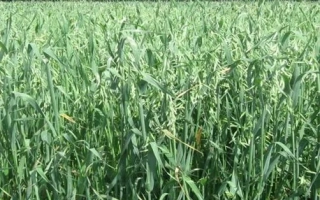
A reliable staple for food and feed production
The 'Baguet' oat variety is the result of long-term selective breeding by leading Russian agricultural research centers, including the Federal Agricultural Scientific Center of the North-East and the Samara Federal Research Center of the Russian Academy of Sciences. Designed for broad adaptability, this variety has become a trusted asset for both commercial farming and processing industries.
Agronomic potential and specifications
As a mid-season variety (95–110 days), 'Baguet' allows for efficient harvest planning in temperate climates. With a plant height of 80–90 cm, the variety offers excellent uniformity, facilitating mechanical harvesting. With proper agronomic management, yields consistently exceed 60 centners per hectare.
- Grain Quality: The protein content remains stable at 13% or higher, making the variety highly suitable for food production, including milling and flakes. The thousand-kernel weight (TKW) ranges from 28 to 32 grams.
- Phytosanitary Defense: Breeders have prioritized resistance to key pathogens. 'Baguet' demonstrates strong tolerance to powdery mildew and spotting, as well as resistance to the frit fly, which reduces the need for frequent pesticide interventions.
Market positioning
‘Baguet’ occupies a solid niche as a versatile oat variety. It is favored by growers who prioritize consistency: high yields combined with quality traits suitable for both food processing and high-energy fodder production. Thanks to the collaborative efforts of research centers in Kirov and Samara, this variety provides a reliable solution for producers seeking to mitigate risks associated with cereal diseases while securing stable gross output.
Crop & resistance
Crop
Disease resistance
Pest resistance
Specifications hover over for a hint about the specification
Store offers
Prices are updated on loadLoading offers…
Aggregator catalog: prices are collected automatically from store websites, normalized by AI and converted at the current exchange rate. Before ordering, confirm the price and availability on the store's website. This block is not indexed by search engines — the data is loaded after the page opens.
Not yet комментариев. Be the first!


ARGAMAK
ФГБНУ Федеральный Аграрный Научный Центр Северо-востока имени Н.В. Рудницкого
043 1 offer
0.07 €per 1 kg ≈ 4 ₴

See also
Often considered together with this variety






Recently viewed
Products you’ve viewed on this site
Reviews · 0