


SKU #65096
·
43 views
Oat ALLIUR
Oats
User rating
0 votes0% positive reviews
No ratings yet — be the first.
Ripeness Group (days)
Medium-maturing (95-110)
Yield
60+
Disease Resistance
Mottling, Rust, Powdery mildew, Mixed
Mass of 1000 seeds (g)
32-36
About product

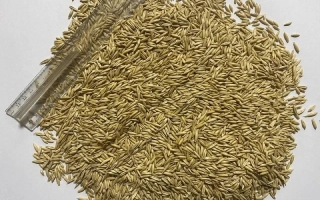
The Alliur spring barley variety is a mid-season mutant with a white, awless head. It features a semi-erect bush, a leaf with a weak waxy coating, and a semi-compressed white panicle. The grain is semi-elongated with sparse hairs at the base; the mass of 1000 grains ranges from 33 to 38 grams. The vegetative period lasts from 79 to 89 days, maturing simultaneously with the Drug variety. Alliur is…
Ripeness Group (days)
Medium-maturing (95-110)
Yield
60+
Disease Resistance
Mottling, Rust, Powdery mildew, Mixed
Mass of 1000 seeds (g)
32-36
Description
The Alliur spring barley variety is a mid-season mutant with a white, awless head. It features a semi-erect bush, a leaf with a weak waxy coating, and a semi-compressed white panicle. The grain is semi-elongated with sparse hairs at the base; the mass of 1000 grains ranges from 33 to 38 grams. The vegetative period lasts from 79 to 89 days, maturing simultaneously with the Drug variety. Alliur is distinguished by high yields, exceeding the regional average of 36 centners per hectare by 1.3 centners, with maximum yields reaching 80.2 centners per hectare.
The variety possesses moderate drought resistance, comparable to the Skaun variety, and above-average lodging resistance. However, it is highly susceptible to head diseases and susceptible to crown and stem rusts, which requires mandatory seed treatment and fungicide treatments according to plant protection service recommendations. Dusty smut susceptibility is above average, while crown rust susceptibility is below average.
Alliur is suitable for cultivation in the Northwestern, Central Black Earth, and Middle Volga regions. The variety's grain features good quality, making it suitable for use in the food industry. The variety was created jointly by the Ulyanovsk and Penza Agricultural Research Institutes and is the result of individual selection from the fourth generation of hybrids.
The variety possesses moderate drought resistance, comparable to the Skaun variety, and above-average lodging resistance. However, it is highly susceptible to head diseases and susceptible to crown and stem rusts, which requires mandatory seed treatment and fungicide treatments according to plant protection service recommendations. Dusty smut susceptibility is above average, while crown rust susceptibility is below average.
Alliur is suitable for cultivation in the Northwestern, Central Black Earth, and Middle Volga regions. The variety's grain features good quality, making it suitable for use in the food industry. The variety was created jointly by the Ulyanovsk and Penza Agricultural Research Institutes and is the result of individual selection from the fourth generation of hybrids.
Crop & resistance
Crop
Disease resistance
Specifications hover over for a hint about the specification
| Ripeness Group (days) | Medium-maturing (95-110) |
|---|---|
|
Yield
Yield
Overall bulb harvest per unit area. Depends on both onion variety characteristics and agronomic practices, fertilizers, and irrigation. Under optimal growing conditions, an onion yield of 100 tons per hectare and above is not considered record-breaking. |
60+ |
| Disease Resistance | |
| Mass of 1000 seeds (g) | 32-36 |
| Grain-oriented | |
| Corn Color | |
| Usage Type | |
| Registration year | 1997 |
| Catalog | Catalog → Oats |
| Legal data |
Show · 10
|
| Country | Russia |
Store offers
Prices are updated on loadLoading offers…
Aggregator catalog: prices are collected automatically from store websites, normalized by AI and converted at the current exchange rate. Before ordering, confirm the price and availability on the store's website. This block is not indexed by search engines — the data is loaded after the page opens.
Not yet комментариев. Be the first!




See also
Often considered together with this variety




Recently viewed
Products you’ve viewed on this site
Reviews · 0