


SKU #68713
·
31 views
KAZAN FODDER MILLET
Millet
User rating
0 votes0% positive reviews
No ratings yet — be the first.
Type of Sort
Sort
Resistance to lodging
High
Registration year
1991
Prices in stores
from10.4 €per 1 kg
pack from 10.4 € per 1 kg
1 offer from 1 store
Store offers · 1 from 1 stores
Prices are updated on loadLoading offers…
Available at: Ledaagro
Aggregator catalog: prices are collected automatically from store websites, normalized by AI and converted at the current exchange rate. Before ordering, confirm the price and availability on the store's website. This block is not indexed by search engines — the data is loaded after the page opens.
About product

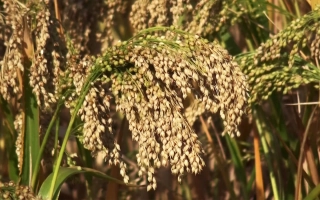
Kazan fodder millet is a medium-late maturing variety of grain millet (Panicum miliaceum L.) with a vegetation period of about 77 days. The plants reach an average height of 64 to 99 cm and are characterized by stability against lodging, shattering, and drought at the level of the standard. The mass of 1000 grains varies from 6 to 7.6 grams; the grain is large, oval-shaped, and yellow. The panicle…
Type of Sort
Sort
Resistance to lodging
High
Registration year
1991
Description
Kazan fodder millet is a medium-late maturing variety of grain millet (Panicum miliaceum L.) with a vegetation period of about 77 days. The plants reach an average height of 64 to 99 cm and are characterized by stability against lodging, shattering, and drought at the level of the standard. The mass of 1000 grains varies from 6 to 7.6 grams; the grain is large, oval-shaped, and yellow. The panicle of the variety is large, strongly compressed, dense, and elongated, which contributes to high yields – over 38 centners per hectare. Millet is distinguished by high responsiveness to fertilization and excellent cereal properties with a bran output of 76–79% and hull content of 15–17%. The plant has a cylindrical hollow stem with up to 10 nodes and a tufted root system that penetrates the soil to a depth of up to 150 cm and spreads sideways by 100–120 cm. The leaves are alternate, with blades 18 to 65 cm long and 1–4 cm wide. The inflorescence is represented by a panicle 10 to 60 cm long, consisting of a main axis and branches of several orders, at the ends of which are two-flowered spikelets with one grain. Millet grain is distinguished by a variety of colors, but in this variety it is yellow and oval. The fodder qualities of Kazan fodder millet are high: green mass in terms of nutrition is not inferior to oats and fodder peas, contains 40–42 mg of carotene per kilogram, and has an exchange energy of 8.92 MJ per kilogram of dry matter. The thin culm promotes rapid drying in stacks, which facilitates harvesting and processing of the crop. The variety is resistant to major diseases such as smut and melanosis, which ensures stable crop formation under various weather conditions.
Crop & resistance
Disease resistance
Specifications
| Type of Sort | |
|---|---|
| Resistance to lodging | |
| Registration year | 1991 |
| Catalog | Catalog → Millet |
| Legal data |
Show · 11
|
| Country | Russia |
Not yet комментариев. Be the first!




See also
Often considered together with this variety


Recently viewed
Products you’ve viewed on this site
Reviews · 0