


SKU #70070
·
62 views
Honeysuckle BERENCHE
Honeysuckle
Prices in stores
No offers yet — stores have not added prices for this product yet.
Similar varieties with prices
-
KASMALAFANCA
from 4.28 €
-
 CalipsoFANCA
from 2.97 €
CalipsoFANCA
from 2.97 €
-
 BarkhatFANCA
from 4.7 €
BarkhatFANCA
from 4.7 €
-
 Omega
from 3.88 €per seedling
Omega
from 3.88 €per seedling
Berry Weight
1.0–1.5
Flavor
Sour-sweet with a hint of bitterness
Sugar Content
7–9
Vitamin C Content (mg/100g)
30–40
Your mark
0 votes
0% positive ratings
Description
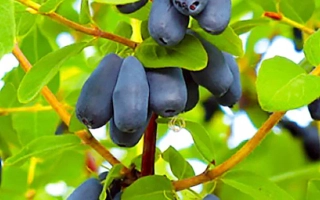
The Berench blueberry honeysuckle variety is early-ripening and universal, suitable for cultivation in various regions, including the Volga-Vyatsky and Moscow. The bushes are medium-sized with compact, dense, and rounded hemispherical crowns. Shoots are thick and upright, ensuring ease of care and harvest. Berries have an average size of about 1.1 grams, an elongated cylindrical shape, and are colored dark blue or violet-blue, turning almost black at full ripeness. The skin is of medium thickness, and the taste is acid-sweet with a pleasant aroma and slight bitterness. Sugar content reaches 7.5%, acidity – 2.2%, and vitamin C – 37.9 mg%.
The variety is distinguished by high winter hardiness and resistance to diseases and pests, making it unpretentious in care. However, Berench honeysuckle is self-sterile, so for successful fruiting, it is recommended to plant it next to other varieties, such as Kamchadal. Pollination occurs with the help of bees and bumblebees, which promotes good fruit setting.
To maintain the health and productivity of bushes in early spring, feeding with complex mineral fertilizers or watering with a cow dung infusion is recommended. During the summer, 1-2 feedings with organic fertilizers, such as grass infusions, can be carried out, but feedings should be stopped after mid-July. The variety is suitable for cultivation both in industrial conditions and in home gardens, ensuring a stable and high-quality harvest by early June.
The variety is distinguished by high winter hardiness and resistance to diseases and pests, making it unpretentious in care. However, Berench honeysuckle is self-sterile, so for successful fruiting, it is recommended to plant it next to other varieties, such as Kamchadal. Pollination occurs with the help of bees and bumblebees, which promotes good fruit setting.
To maintain the health and productivity of bushes in early spring, feeding with complex mineral fertilizers or watering with a cow dung infusion is recommended. During the summer, 1-2 feedings with organic fertilizers, such as grass infusions, can be carried out, but feedings should be stopped after mid-July. The variety is suitable for cultivation both in industrial conditions and in home gardens, ensuring a stable and high-quality harvest by early June.
Crop & resistance
Crop
Specifications
| Berry Weight | 1.0–1.5 |
|---|---|
| Flavor | |
| Sugar Content | 7–9 |
| Vitamin C Content (mg/100g) | 30–40 |
| Registration year | 2022 |
| Catalog | Catalog → Honeysuckle |
| Legal data |
Show · 2
|
| Country | Russia |
No reviews yet. Be the first to share your experience.
Alternatives
Honeysuckle saplings · similar varieties




See also
Often considered together with this variety






Recently viewed
Products you’ve viewed on this site
Reviews