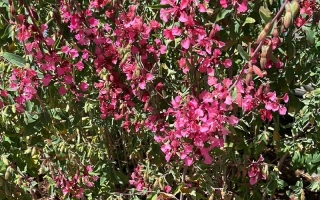
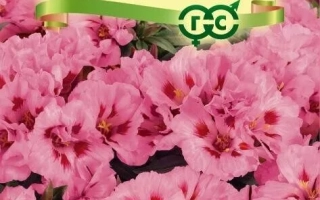
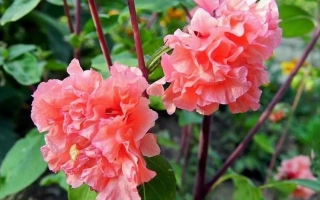
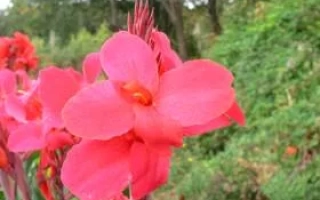
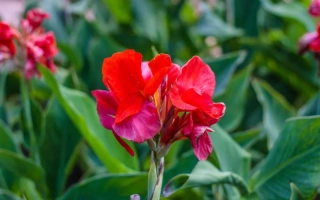
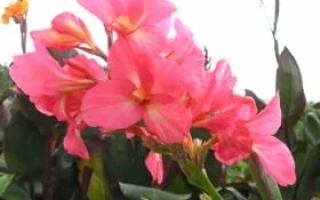
Clarkia (Clarkia unguiculata) – an elegant annual from the Onagraceae family, native to California, which attracts gardeners with its ornamental qualities and ease of care. The plant reaches a height of 30 cm to almost 1 m, has erect branched stems with green oval-elongated leaves adorned with reddish veins and a bluish bloom. The leaves are dark, while the flowers are bright, often in shades of white, pink, or purple, making Clarkia an excellent accent in landscape compositions.
For successful cultivation, Clarkia seeds are pre-treated with potassium permanganate and sown for seedlings in March. After the first leaves appear, pricking out is carried out, followed by transplanting into open ground in early May or in autumn. Site preparation includes digging and adding fertilizers high in potassium; peat is added to soil with low acidity, and lime grit to acidic soil. The plant prefers loose, slightly acidic soil with moderate moisture, so drainage with sand is recommended in heavy soils.
Care for Clarkia is simple: regular watering for young plants, moderate watering for adults; removal of withered inflorescences and weeding to maintain the cleanliness of the planting site. Feeding is carried out every two weeks with complex fertilizers for flowering plants, and if necessary, with potassium sulfate or superphosphate. Clarkia is rarely affected by diseases; if mealybugs appear, fungicides are used. Thanks to its drought resistance and ease of propagation by seeds, this plant is perfect for group plantings, as well as in the foreground or along walls.
In terms of decor, Clarkia combines well with zinnia, echinacea, chamomile, phlox, and petunias. It also looks great in hanging pots and retains freshness in cuttings, opening all buds. Thanks to its bright flowers and simple care, Clarkia is becoming a popular choice among gardeners who want to add a picturesque accent to their landscape.